

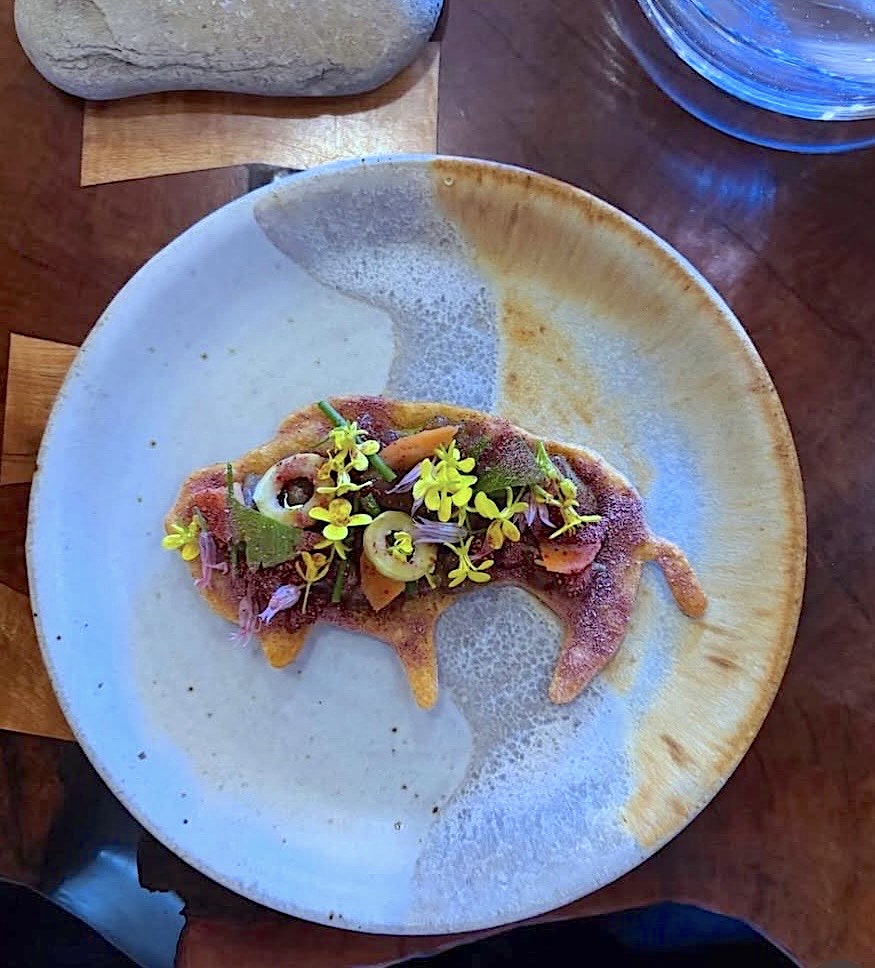
The bison plate at Nagaan features vegetables and garnishes indicative of the restaurant’s high-end cuisine. (Photo courtesy of Nagaan)
In Ojibwa, naagan means “dish”. In Ontario’s Bruce Peninsula, the word refers to an intimate, 17-seat, fine-dining restaurant in the heart of Owen Sound.
The March 12, 2026 issue of Time named Naagan one of “The World’s Greatest Places of 2026”. Of particular note, Naagan was the only Canadian restaurant included among the “100 extraordinary destinations, hotels, restaurants and attractions” selected from around the globe. Amazing recognition for a restaurant open less than a year.
Owen Sound, on the shore of Lake Huron, sits on traditional Ojibwa Territory. Zachary Keeshig, Ojibwa chef and owner of Naagan delivers a 12-course tasting menu inspired by Indigenous cuisine that draws on locally sourced ingredients along with techniques refined in high-end kitchens.
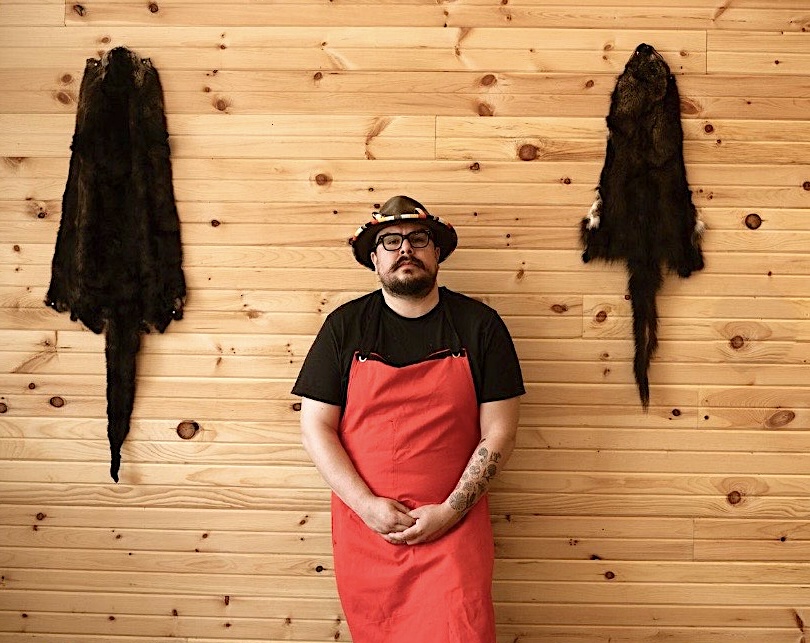
Chef/owner Zachary Keeshig has used his training at Michelin-starred restaurants to elevate the traditional cuisine of his ancestors at Nagaan. (Photo courtesy of Nagaan)
Torontonians have been making the two-hour drive and guests are coming from Ottawa and Montreal specifically to experience the menu.
Vacay.ca recently interviewed Keeshig to learn about his cuisine and inspirations.
Vacay.ca: In three words, what is the Naagan menu?
ZK: Foraging, game, and fishing.
Vacay.ca: Is there one ingredient that defines Indigenous cooking for you?
ZK: I don’t know that there is just one. We use multiple ingredients in åthe restaurant. Because Owen Sound is on traditional Nawash Territory, I decided to forage things from here. All our fish comes from my cousin who has an Indigenous commercial fishing boat. We get beautiful fresh pigeons, smoke and cook them over birchwood, then glaze them with magnolia vinegar. We grow a sacred medicine like sweetgrass and turn it into a beautiful ice cream and sweeten it with maple syrup. I try very hard to exclusively source locally.
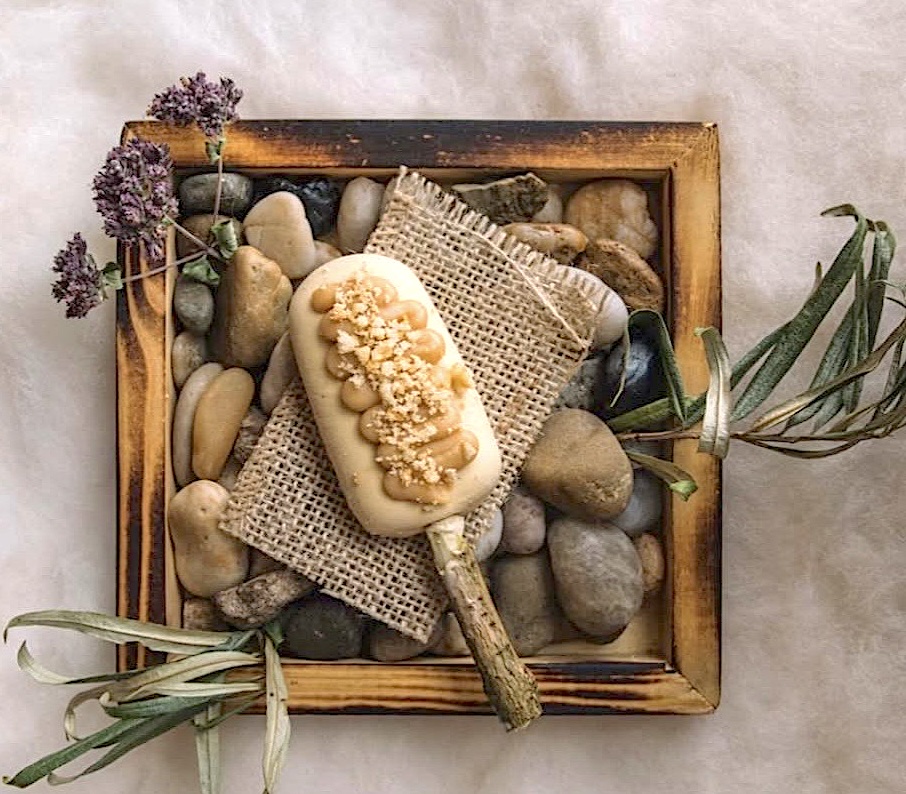
At Nagaan, popsicles can contain sweetgrass ice cream and other unique flavours. (Photo courtesy of Nagaan)
Vacay.ca: Are there any culinary customs or rules that you live by?
ZK: I don’t think so. We are not doing traditional food. I am using the experiences I’ve had working in one- and two-star Michelin restaurants and Canada’s other best restaurants to tell my story of what this cuisine could be. I use modern techniques but I cook over fire. We rely heavily on the fishermen, as well as foraging, pickling, and drying. Then we go to local farmers’ markets to pick up what is in season.
MORE CHEFS: Chanthy Yen Showcases Cambodia
Vacay.ca: You have said you feel North America’s oldest culinary identity is the least understood. How do you hope to change that perception?
ZK: I think that it all comes down to the philosophy and the modern interpretation we are doing with food that hasn’t really been done before on the Canadian dining scene. It is things like this interview and being introduced in Time magazine that help spread the word and hopefully stirs interest. It’s time for our food to have its moment. We talk about French food; we talk about Italian food; we talk about Indian food. I am a big believer that Indigenous food should be part of that same conversation when people think about where they are going to eat that evening. Our cuisine is more than moose meat or the three sisters.
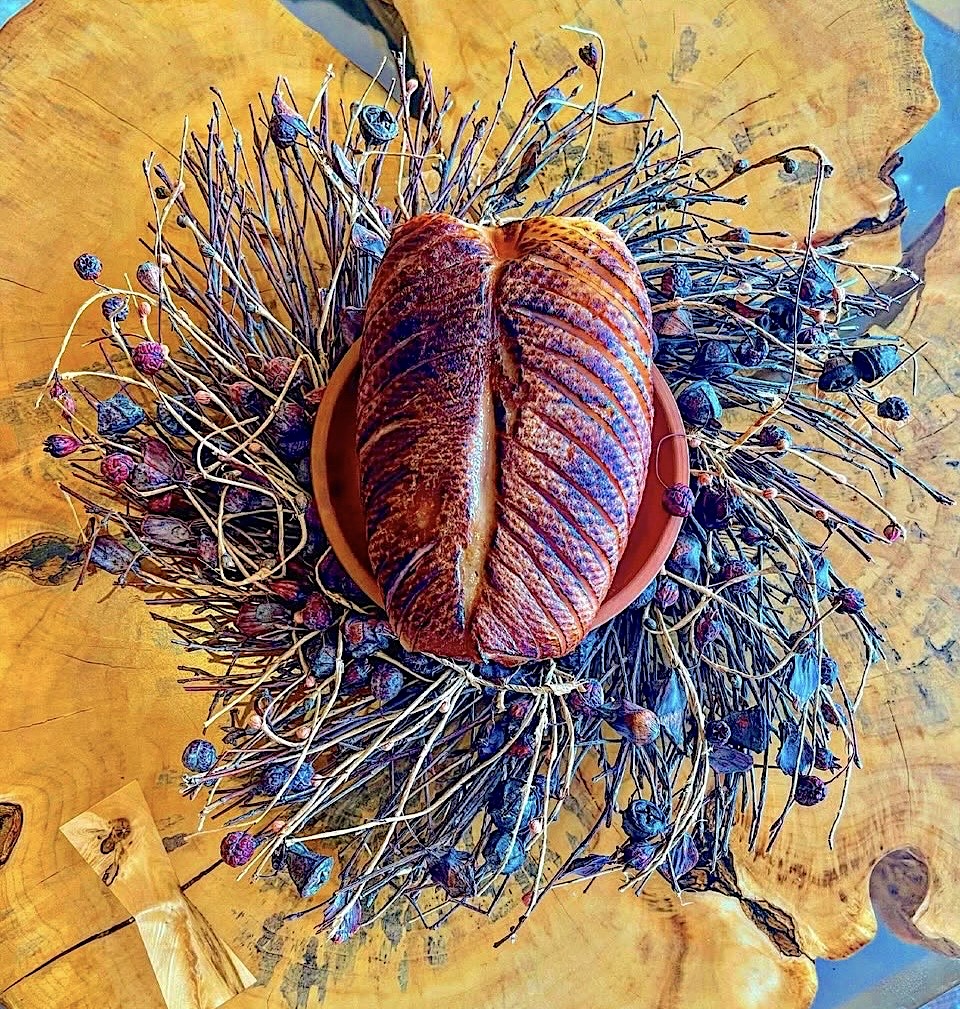
Nagaan takes a contemporary fine-dining approach to execute stunning plates, such as this one. (Photo courtesy of Nagaan)
Vacay.ca: You opened Naagan in October 2025 and today you are sold out a month in advance. How do you account for this instant stardom?
ZK: I took over the space in January 2024. I was self-funded and it took
a year to renovate. I think it comes down to the philosophy and something that hadn’t been done before.
Vacay.ca: And speaking of stars, you have said your dream is to be the first Indigenous chef in North America to earn a coveted Michelin star.
ZK: It wouldn’t be great just for me but it would be a statement to our culture of Canada and Ontario and hopefully inspire our people. Sometimes I feel the media labels us as oppressed Indians. To see someone like me aspire and garner something like a Michelin star would inspire others.
Vacay.ca: Tell us about growing up and how you became interested in cooking.
ZK: I was raised by women who were always in the kitchen cooking. I moved out at 16. Living on my own, I needed a job and I had to eat. Cooking was a natural. I went to culinary school at 20. While there, I worked for the college and learned the catering side of food service. Owen Sound was such a small place, great restaurants didn’t exist. I alternated between cooking here and going off to work and learn at gourmet restaurants, adding to my repertoire. Last year, I went to New York City to work at a Scandinavian restaurant and discovered the similarity between the two cuisines. Going, learning and coming back to add to my repertoire is something I continue to do.
Vacay.ca: You apprenticed with celebrity chef Michael Stadtländer in Ontario’s Grey Highlands. How did that experience influence your cooking? What did you learn from chef Stadtländer?
ZK: Michael was the guy that probably influenced me the most. When I started cooking, nobody was growing their own ingredients or introducing wild things in their food. Michael was growing his own herbs, raising his own cattle and ducks. It inspired me to come back here and change the way I thought about food. I came back and immediately started my own business because I knew nobody around here would let me cook the food I wanted to.
Vacay.ca: When did you begin to think about the culinary heritage of your people?
ZK: Not until I was 27 or so when I wanted to try to modernize my aunts’ and my grandmother’s recipes, which were spoken rather than passed down in books. When I asked around, there were no recipe books or printed recipes to hand down. That’s when I decided to use the techniques I learned from cooking in different restaurants, to source specifically from our area and to cook over fire.
Vacay.ca: Describe for our readers what it is lke walking into Naagan.
ZK: I designed the restaurant myself. I wanted people to feel as if they were walking into my wood cabin or my wood sweat lodge for the evening. The walls are pale pine, rubbed with oxidized hemp oil. The tables are handmade of cherry, black walnut, and maple. White sheep skins drape the backs of the chairs. Jars of house-made preserves line the shelves and bundles of dried plants and medicinal herbs hang from the ceiling. Indigenous art plasters the walls. We have gone beyond beautiful dishes served on white plates to a more creative presentation with individually designed wooden or handmade potter dishes. The walls of the tiny open kitchen are lined with beach rocks, which we collected on the reserve.
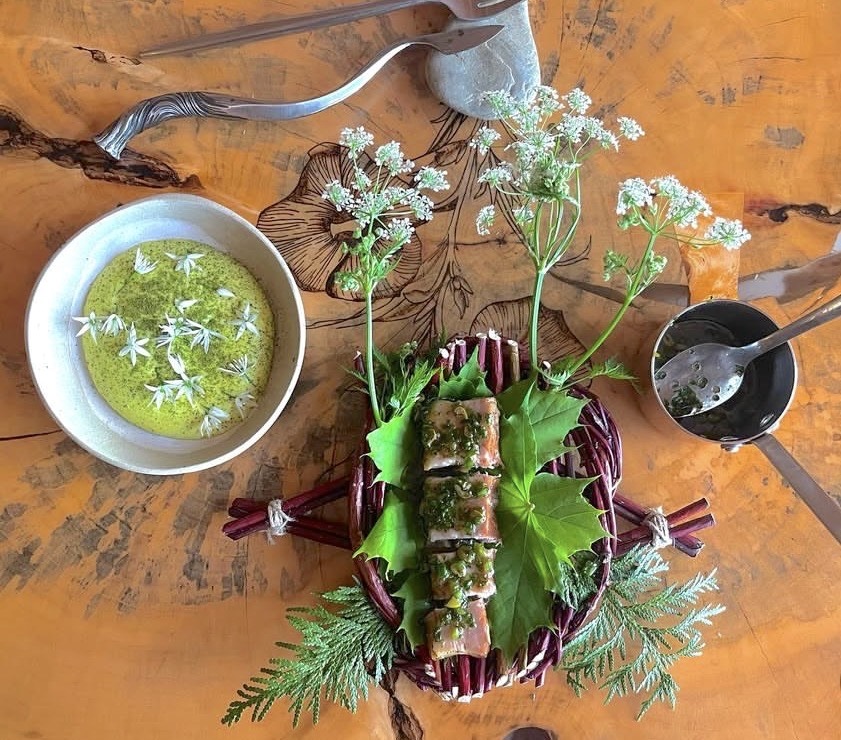
Traditional Indigenous ingredients receive a refined touch at Nagaan. (Photo courtesy of Nagaan)
Vacay.ca: What are some of the dishes in your 12-course menu?
ZK: We start off with memories of my childhood. It could be bison tartar and then a tartlet filled with lingcod fish, called a poor man’s lobster. Right now, we are fish heavy. We grill white fish over birchwood, make a sauce with the bones and garnish with things from the market or that we have foraged. We serve wild boar with a herb vinaigrette and black currants. Dessert might be ice cream made from dandelion roots and turned into a type of coffee substitute, then sweetened with black walnut syrup. It’s a three-hour journey with lots of storytelling. We are approved to serve wild game — something few restaurants in the country are able to do.
Vacay.ca: And for beverages?
ZK: We do not serve alcohol. My father, unfortunately, was an alcoholic. And given the problems with alcohol on reserves, I decided as an Indigenous man, opening an Indigenous restaurant, I didn’t want to contribute to that situation. We make a lot of our own beverages.
Vacay.ca: Do you plan to travel this fall? Where will you be going and what do you hope to discover?
ZK: I have been invited to cook in Vancouver. I want to see what chefs
are doing there and to discover new ingredients and techniques so I can take my cuisine to the next level. I really want to go back to New York to add to my repertoire and refine my food. Becoming a chef doesn’t happen overnight or by going to school for a year. It’s a craft you are always learning and you are always a student.
Vacay.ca: We look forward to hearing about a Michelin star in your future.