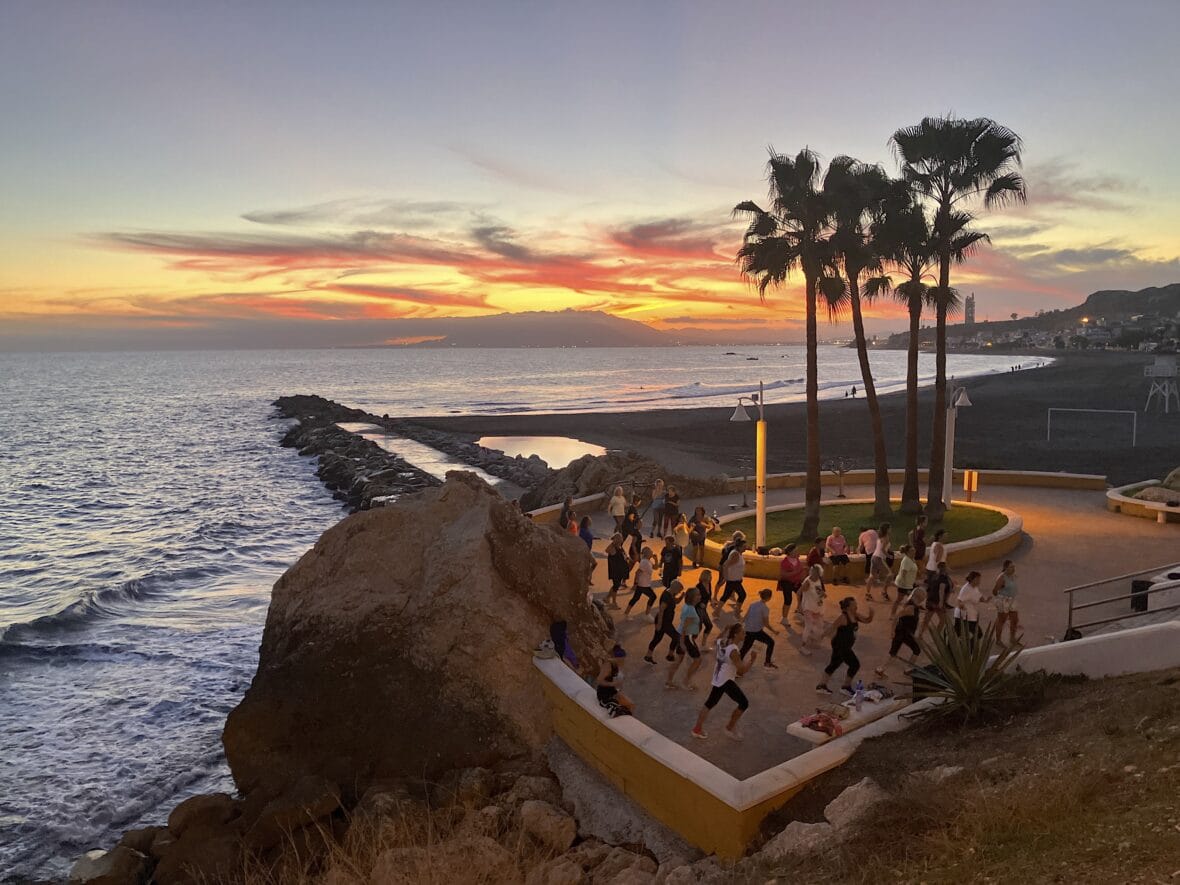

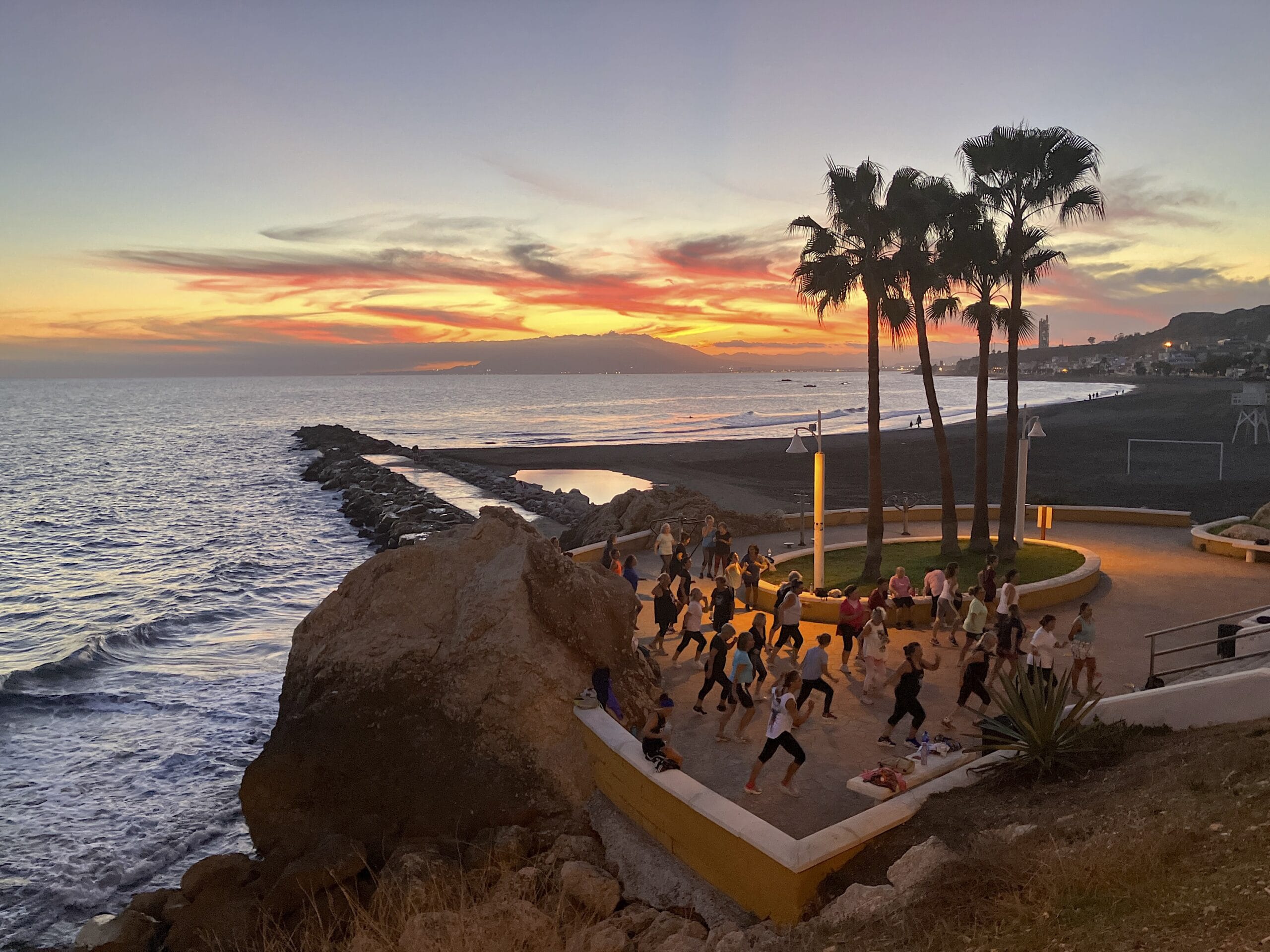
The sunset in Malaga in the south of Spain is an eternally joyful scene. (Bruce Sach photo for Vacay.ca)
All those hours you’ve spent on your language-learning app are commendable, but what if you could make up months of Duolingo, say, in just two weeks?
And in doing it, you’d learn a new culture, food, lifestyle, discover a new city, and even make some interesting contacts from across Europe who share your interest in Spanish.
The Malaca Instituto, a 54-year old Spanish language school located in Malaga, might just be the answer. Malaga, a well-known, but lesser visited city in Spain’s Costa del Sol is worth getting to know.
With its extremely walkable old town (Casco Viejo), Mediterranean cuisine, and friendly populace, Malaga is easily reached from Canada. The city is accustomed to welcoming guests from around the world, as one of its top attractions is the Picasso Museum. Yes, Picasso was born in Malaga and spent the first nine years of his illustrious life there.
Fifteen minutes away from the Casco Viejo, in the upper-class district of Cerrado del Calderon, sits the Malaca Instituto. (Malaca is the historic name for Malaga). You could spend your entire day in the school, as it boasts everything you need: classes, residences, cafeteria, and even a laundry.
But, within a minute, you’re in the middle of a high-brow neighbourhood, and a 10-minute walk takes you to the beach that sits on the Alboran Sea, the westernmost part of the Mediterranean.
I’ve been to Spanish-language courses in Mexico and Ecuador, but the Malaca Instituto is as good as it gets. It creates and publishes its own pedagogical material, for beginners to advanced students. Return students are common. The champion is a German lady who came 20 times. I met a fellow Canadian who had been nine times. Students can extend their two-week stay, one week at a time, if there is space.
MORE SPAIN: Europe’s Most Beautiful City
My wife and I had to undergo a placement exam (written and oral) before leaving home, and the first morning of classes we were put into groups whose grammar knowledge was similar to ours, although speaking abilities varied.
In my class we concentrated on the subjunctive mode with our ever-patient, but highly motivated veteran teacher. Our group, consisting of three Canadians, three Austrians, two Swiss, and two teachers from France and the Czech Republic, enjoyed grammar classes with Javier and conversation with Maria, on themes of our choosing.
Questions were always attended to, and along with getting a grasp of Malaga and Andalusian culture, we learned a lot about each other’s countries.
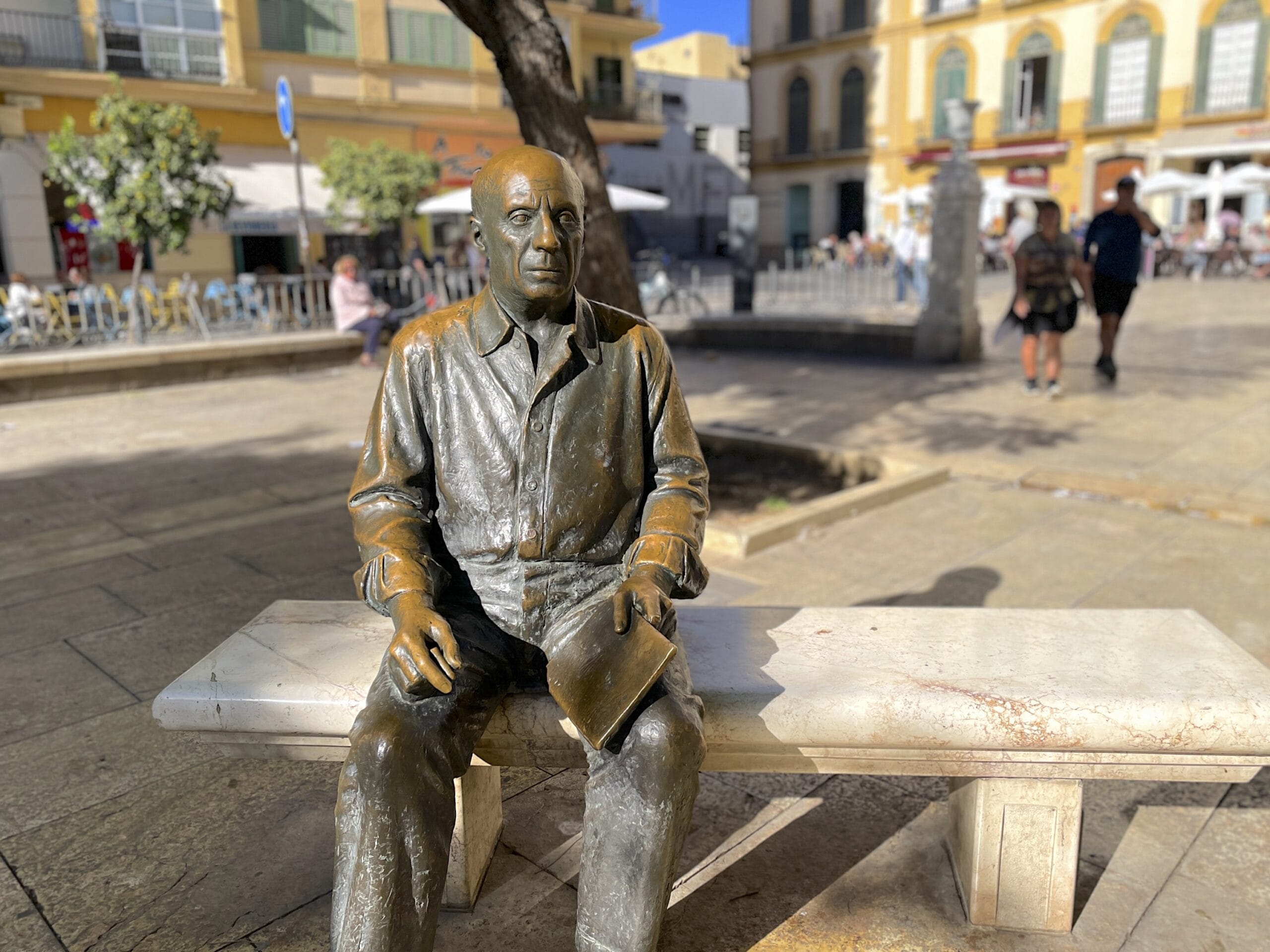
Ever wanted to have a conversation with Picasso? You could try when you encounter this statue of the famous artist in Malaga. It is in front of his namesake museum in the city where he was born. (Carole Jobin photo)
The institute offers different programs. We were enrolled in the 50-plus program, which included all the afternoon talks and afternoon excursions as well as a full-day weekend outing — a memorable trip to Granada.
An optional afternoon talk on flamenco was extremely educational, all in Spanish, naturalemente. It prepared us for two flamenco concerts we attended in the Old Town.
The local beach is minutes away as are the beaches of Malaga proper and all of its many attractions, easily reached by local bus or taxi. School excursions that end in the Old Town can be extended — just tell the guide you will return to your residence on your own.
I chose to stay at the Insitituto, which offers a hostel-like experience. My executive shared room included two small beds, a large desk for two, and a small refrigerator. I went with the full board option with suppers including a beer or a glass of wine. Everywhere in Spain, wine is almost as cheaply priced as water or pop.
Students prefer to extend the immersive experience, billeting with local families, although given the hilly nature of the Cerrado del Calderon district, you could end up exercising more than you bargained.
Learning a new language is never easy, but I was surprised by the English words that have crept into Spanish. Groggy, cookie, jet set, and estrés (en ingles, stress) come to mind. But unlike in many foreign languages, “okay” has not been adopted by Spaniards. Its equivalent, “vale” is a word you’ll hear a lot.
Morning classes start at 8:30 and end at lunch, with a 30-minute break in between. Grammar homework was given on a daily basis. All participants have one goal in common, and it explains why classmates tend to bond quickly. The same instantaneous bonding occurred in my wife’s class. Naturally everyone practices their Spanish all the time. There’s no rule enforcing this, it just occurs. After all, why come all this way and not profit for the chance to communicate in Spanish?
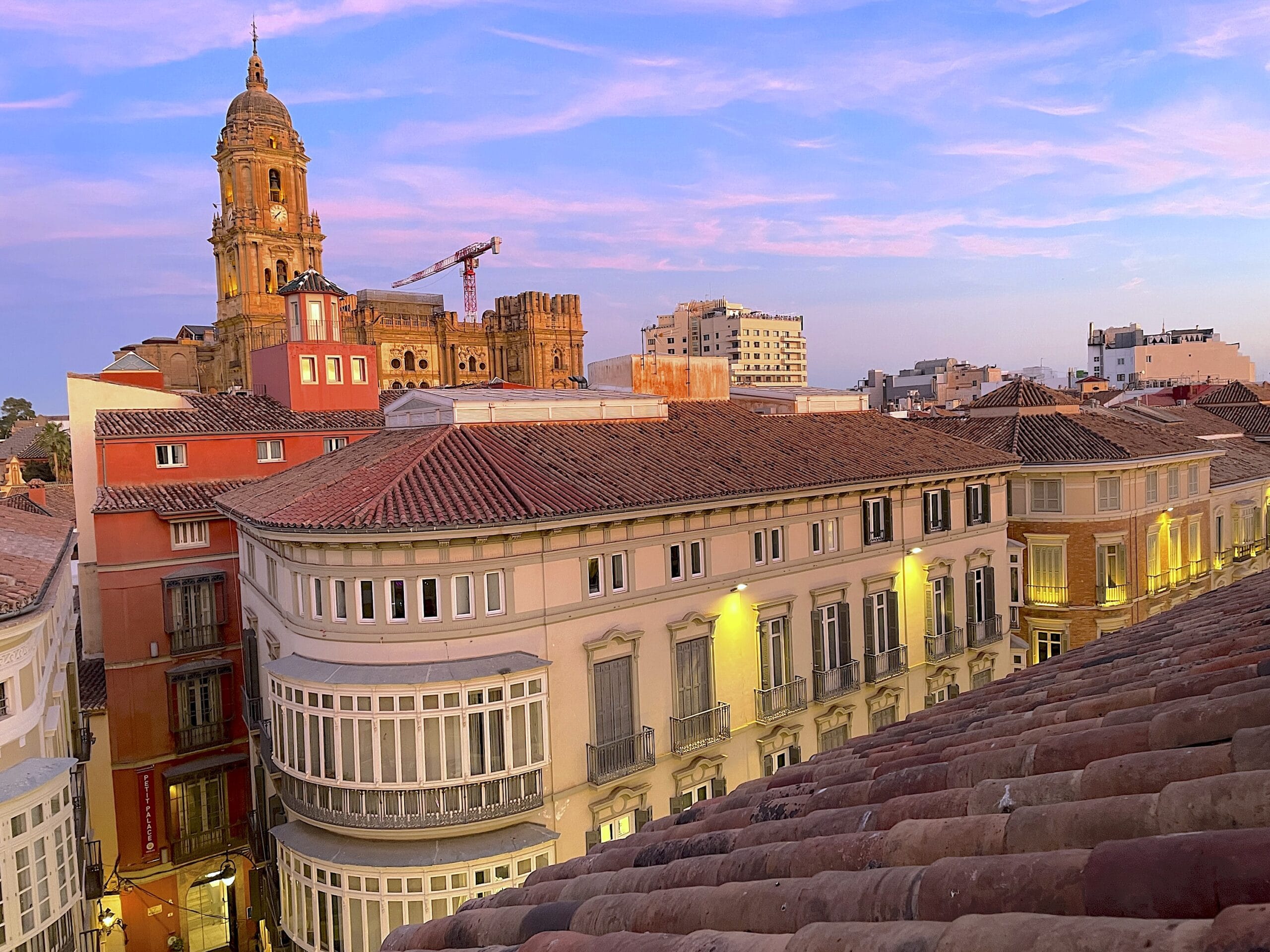
The Malaga Cathedral is one of southern Spain’s most iconic landmarks. (Carole Jobin photo)
A surprising number enroll in order to better communicate with Spanish-speaking in-laws or nephews and nieces who only know Spanish. It’s a known fact that learning a new language helps stimulate the brain. A fellow classmate knew seven languages. He offered the following comments: “This is a very well-managed school overall with very motivated teachers who have often been working for decades. The idea of combining the school with a hotel in the same building just seems like an amazing idea to me. It took me two minutes from the room to my classroom and a minute more to the school-owned restaurant with a magnificent terrace.”
The property management has done well to cater to foreigners. There’s always staff at the reception desk, and executive rooms are cleaned daily. So, it’s almost like staying in a hotel, without the stuffiness, with a feeling more like that of a hostel.
After, or before your experience, you can take online courses as well.
The school will arrange to have you picked up and returned to the Malaga Airport. You can find dates and fees on the institute’s website.
Vacay.ca occasionally publishes content from destinations outside of Canada that our editors believe will be of interest to our audience. In this story, freelance writer Bruce Sach explains a novel way Canadian travellers can learn Spanish abroad.