


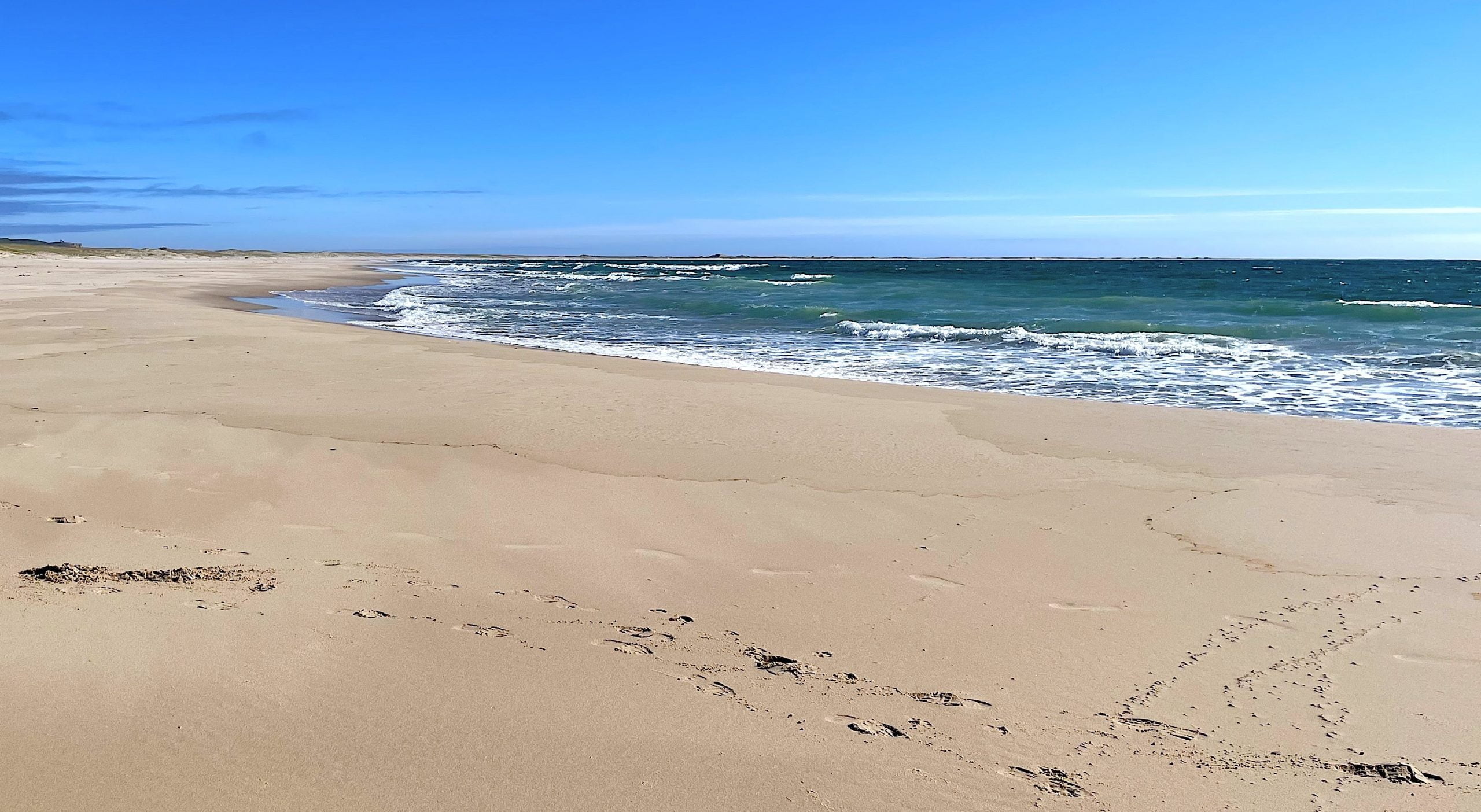
Old Harry’s Beach exemplifies the serenity and beauty of the Magdalen Islands. (Byron Beeler photo)
“Where’s that?” a friend asked when we said we had just returned from Les Îles de la Madeleine (the Magdalen Islands in English, or the Maggies if you prefer nicknames). It wasn’t such a surprising question because, beyond Quebec, the islands have been under the radar for years.
Eight islands, with intriguing names like Ile de Grand’ Entrée, Cap-aux-Meules, and Île de Havre-Aubert, make up the 100-kilometre-long crescent-shaped archipelago. It’s a tiny dot in the middle of the Gulf of St. Lawrence, between the Gaspé Peninsula and Prince Edward Island.
The first settlers, the Acadians, arrived in 1755. The current 13,000 residents have preserved a distinctive version of Acadian French, and their lilting accents vary depending on which island they call home. On one island they roll their “r”s, on the next, they swallow them.
“In 1970, they started calling people who came here tourists,” says Frederic Myrand of Tourisme Îles de la Madeleine. “Before that, the only visitors were people who came on business.” Those tourists who do arrive come to revel in long stretches of sandy beaches, brick-red sandstone cliffs, a smorgasbord of outdoor activities, and an unmistakeable Québécois joie de vivre. It doesn’t take long, we discovered, to disconnect from the real world and submit to the simple rhythm of life here. The lifestyle is one where everyone seems to know everyone else, where people smile, nod and say “bonjour” to visitors.

Painted cottages line the communities on the Magdalen Islands of Quebec. (Byron Beeler photo)
Since 1990, highway 199 has connected six of the islands across long, narrow sandbars. Like different accents, each island has its own personality. What they share is a sense of solitude and Maritime culture. Fishing has always been a way of life here, dictated by the seasons, the wind, and the sea. The number one industry, fishing, contributes $55 million annually to the local economy. Lobster is king and the Madelinots, as the locals refer to themselves, will tell you that the crustaceans caught off their shores are the finest in the world, because of the cold water and the rocky, rather than sandy, gulf floor.
For nine weeks, from the first Saturday in May, 325 fishers rise before the sun to head out to sea, to empty, then bait their lobster traps. They do this six days a week, but never on Sunday, according to a long-standing, unwritten agreement among them. At 10 am, the wharf at Île de Grand-Entrée, dubbed the lobster capital of Quebec, bustles with activity. Fishing boats return with their catch to sort and off-load to bins waiting to be shipped. The camaraderie is infectious.

Lobster risotto from Quai No. 360 is a decadent treat on the Magdalen Islands. (Byron Beeler photo)
When lobster season ends, they fish for herring, mussels, crab, or mackerel. The long winter is for making nets, repairing the traps, and readying boats for the next spring.
No surprise — seafood dominates the local cuisine. What does amaze first-time vacationers is the shockingly great food scene. We indulged at small, unpretentious-looking restaurants that would be easy to pass by if you weren’t aware of their lip-smacking reputation. “There aren’t many places where you can prepare seafood this fresh and enjoy this kind of casual, friendly lifestyle,” says chef Hugo Lefrançois of Resto Bistro Accents at Hotel Madelinot.
More: Get to Know a Magdalen Islands Chef
Among our favourites: Asian fried calamari and seal cooked to perfection by Lefrançois; the best-ever lobster risotto at Quai No. 360; Pot en Pot, a unique sea pie at Café de la Grave; chef Joanne Vigneau’s seared scallops at Gourmande de Nature, and at Les Pas Perdu a, lively, colourful bistro, the famous mussels and frites. Lively Acadian music often accompanied dinner.
Here are some of the things you can do between meals that make the Maggies a want-to-return-to-again-and-again destination.
You can drive it: Highway 199, the Chemin Principal, a narrow ribbon of asphalt, connects six of the islands, across long, narrow sandbars. It takes about 90 minutes to drive from one end to the other. But why not take a day to stop and explore the dunes, walk the beaches and have time for breathtaking photo ops along the way?
You can bike it: Cycling is a great way to tour the islands … assuming the wind is agreeable. On windy days, expect more of a challenge. The Route Verte runs for about 100 km alongside highway 199 and includes off-road excursions. Ride the entire route or plan your own adventure on one of five suggested panoramic roads. Le Pédalier on Cap-aux-Meules (the central and largest island) has touring, racing and e-bikes for rent; e-bikes are available to rent at Eco-Velo des Îles on Étang-du-Nord and motorcycles on Cap-aux-Meules and Fatima.
You can hike it: Le Sentiers Entre Vents et Marées provides the opportunity to explore the islands on foot. If walking the entire archipelago, across each island and through various villages, is more than you want to take on, choose any of the 13 stages that vary from six to 27 kms. Many trails are pet-friendly and all are rated as to their degree of difficulty. A birder’s paradise awaits on Ile d’Entrée, a 60-minute ferry ride from Cap-aux-Meule. Climb the islands’ highest mountain on a clear day, to see all the way to Nova Scotia.
You can beach it: With more than 300 km of white-sand beaches, choosing which one to enjoy could be your most difficult decision. On Grosse îlle’s Old Harry Beach, you can feel the sand between your toes along 10 km of sand and surf. Considered the most beautiful of the islands’ beaches, it’s one to compete with any on PEI. Pack a picnic and go for the day. Let the wind dictate your beach. If blowing from the north, choose a south beach where you will be protected.
You can boat it: En Mer, an award-winning sea adventure specialist since 1979, offers water excursions that include fishing trips, seal watching, exploring the caves and cliffs or an evening at sea to watch a breathtaking sunset.
You can watersport it: Parc de Gros-Cap provides a guided kayak opportunity to witness the beauties of the sculptured red sandstone cliffs from the sea and explore their hidden caves and tunnels. Body surfers will adore it here, too. If you are at least 14 years old, in good physical condition and comfortable in the sea, shimmy into a wet suit and go body bobbing through the water and into the caves carved by the waves. And kite surfing is another thrilling activity to try. “You shouldn’t leave the islands without kitesurfing,” says Youri Gauthier, a certified instructor at Aerosport on L’Etang-du-Nord. Gauthier believes the island is the best place to learn kitesurfing because of its lagoons and consistent wind.
You can shop it: Don’t expect big box stores of city-slick fashionista hangouts. What you will find are tiny wood-shingled shops and boutiques scattered across the islands and clustered along the main street of the historic village on Île du Havre-Aubert. Shop for nautical antiques, handcrafted gifts, and souvenirs and beautiful sculptures molded from sand.
MORE ABOUT THE MAGDALEN ISLANDS
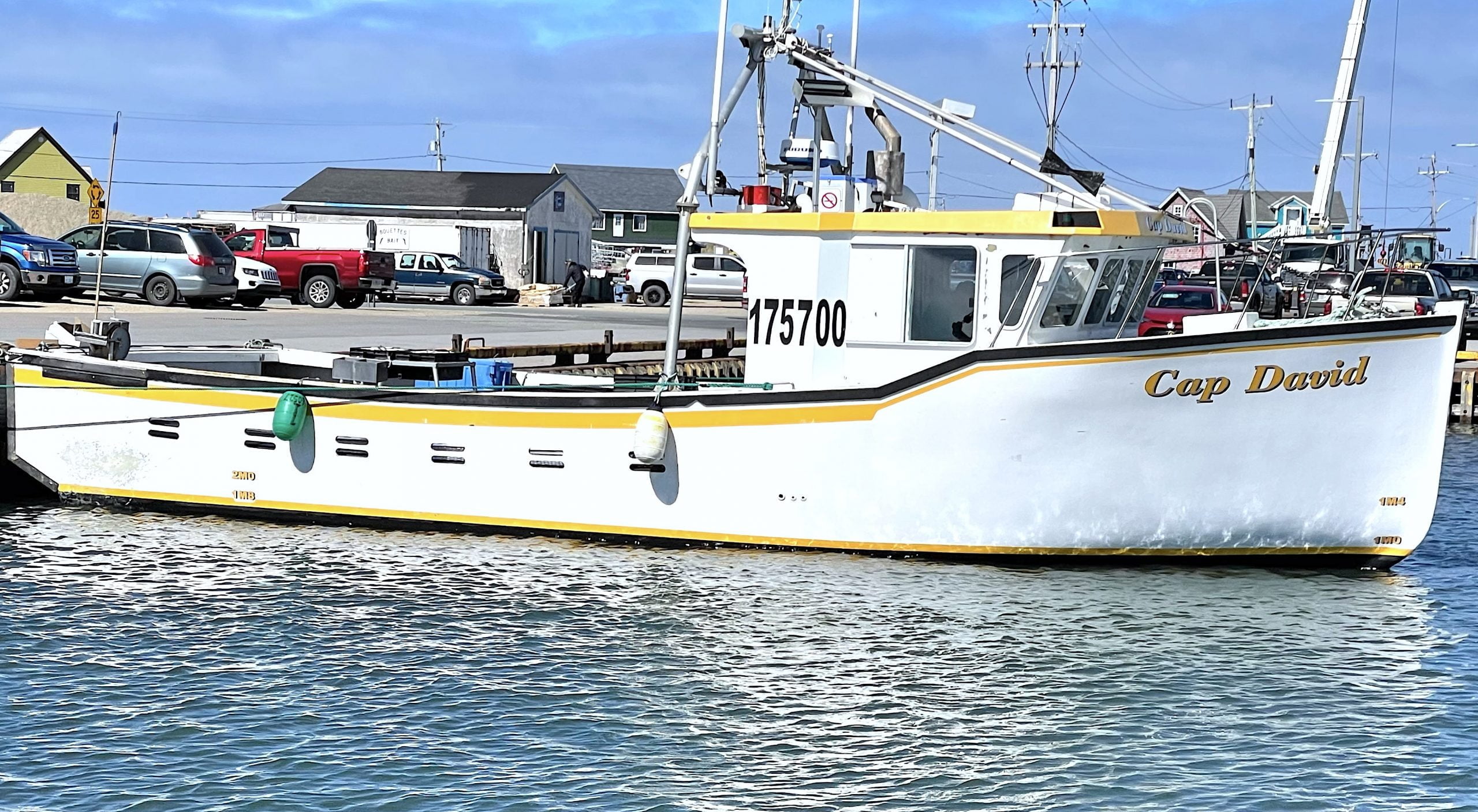
A seal boat is moored between outings at a harbour in the picturesque Magdalen Islands. (Byron Beeler photo)
When to Go: May-June and September-October are delightful months to visit. Hotel and restaurant reservations for high season (July and August) should be made a year in advance.
Getting There: Flights from Montreal and Quebec City arrive at the airport at Havre-aux-Maisons. Seasonal schedule. A five-hour scenic ferry runs daily from July to September from Souris, Prince Edward Island to Cap-aux Meules.
Website: Visit www.tourismeîslesdelamadeleine.com for additional trip-planning ideas.


