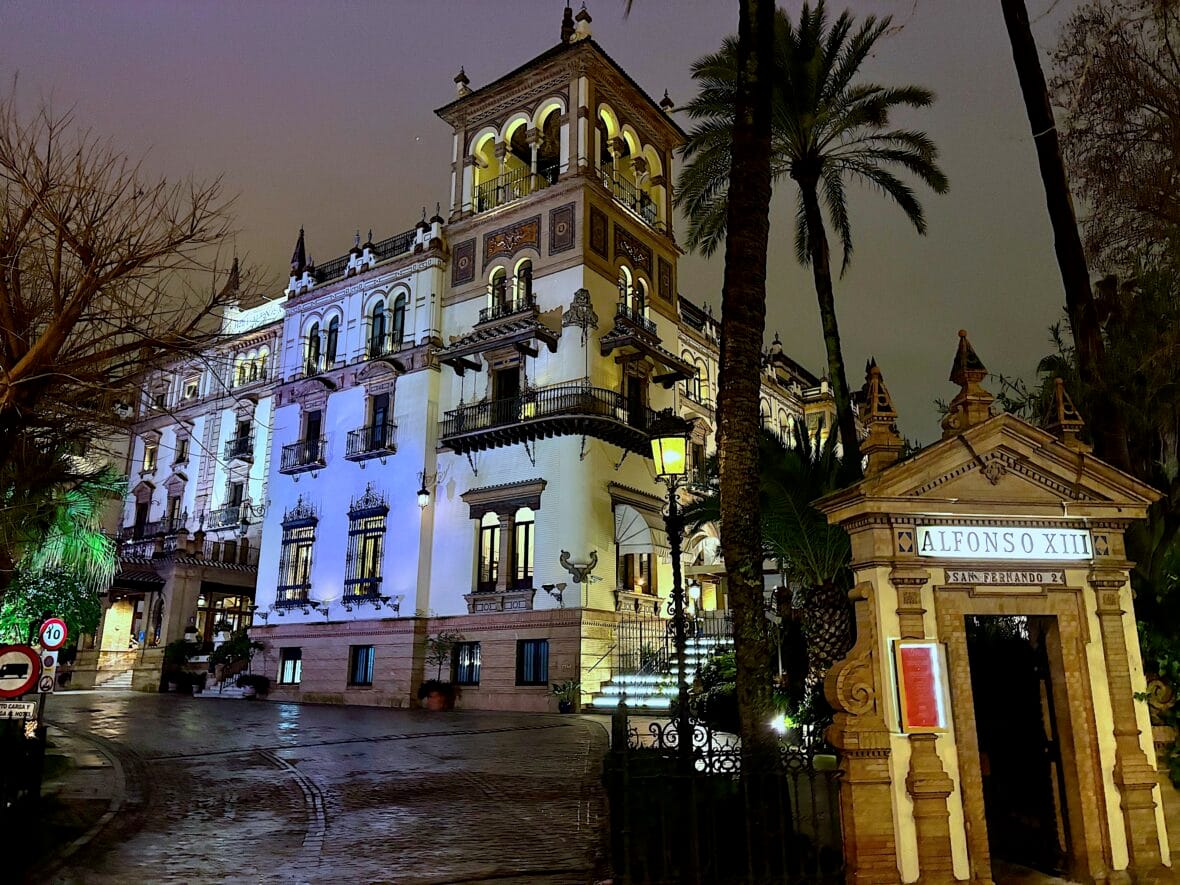

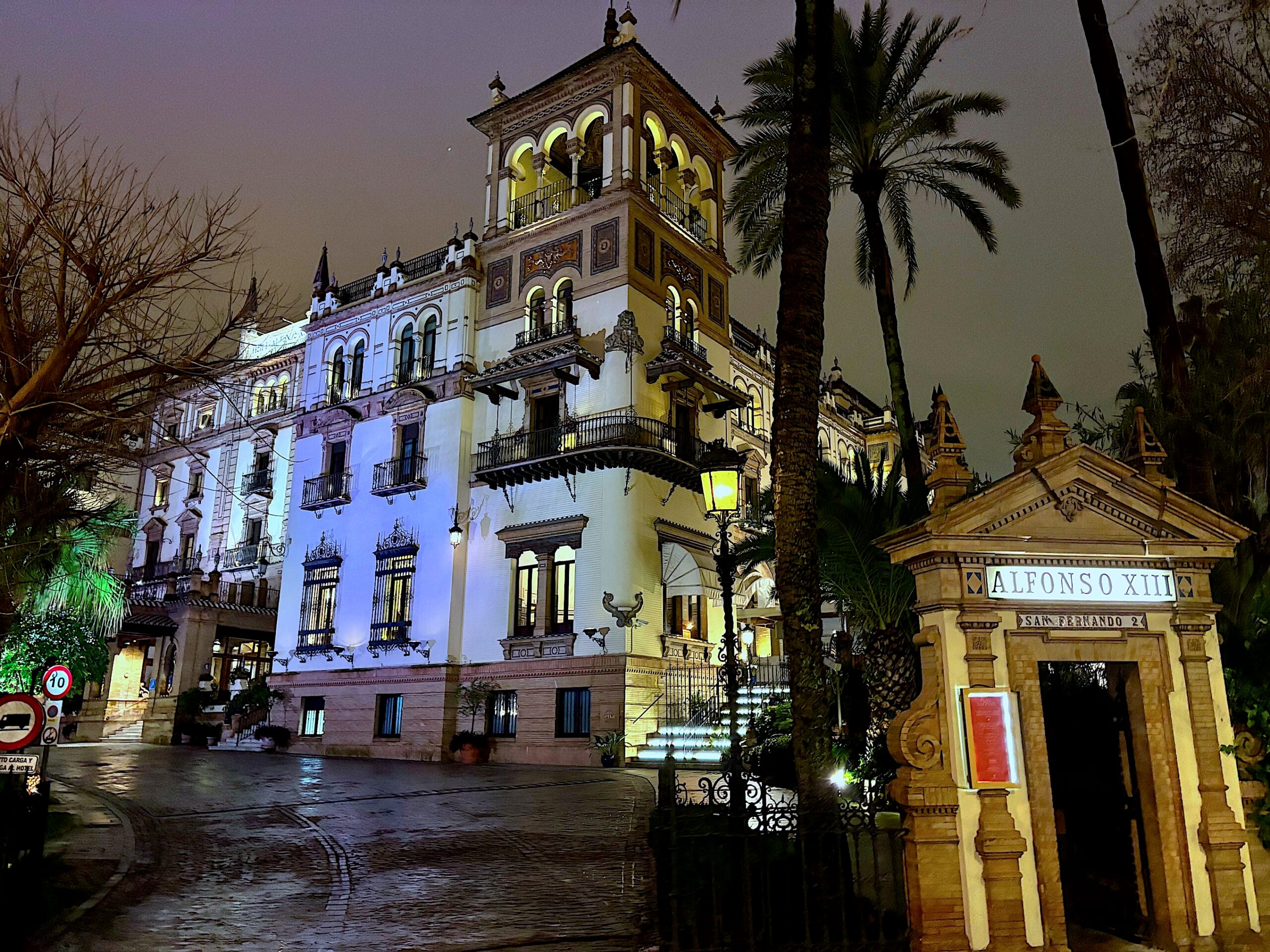
Hotel Alfonso XIII is regarded as one of Europe’s most luxurioius and important properties. It opened in 1928 in Seville. (Adrian Brijbassi photo for Vacay.ca)
I was charmed the moment I entered the Hotel Alfonso XIII. First, before I walked up the white marble steps that lead into its ornate foyer, I marvelled at the building’s exterior: limestone and brick walls lined with iron balustrades, attractive arch windows, and decorative mosaic tilework that instantly connects you to the cultures that have influenced Andalusia. Inside, are more historic accents that blend gracefully with touches of modern elegance.
A vaulted ceiling, dripping with chandeliers, and a grand staircase dominate the lobby level, which features boutique shops that sell posters from significant events hosted at the hotel, jewelry, and unique souvenirs. A sign advertising jazz night caught my eye, leading me to the entrance of the lovely Restaurante San Fernando and then deeper to its rear, where Bar Americano was tucked in.
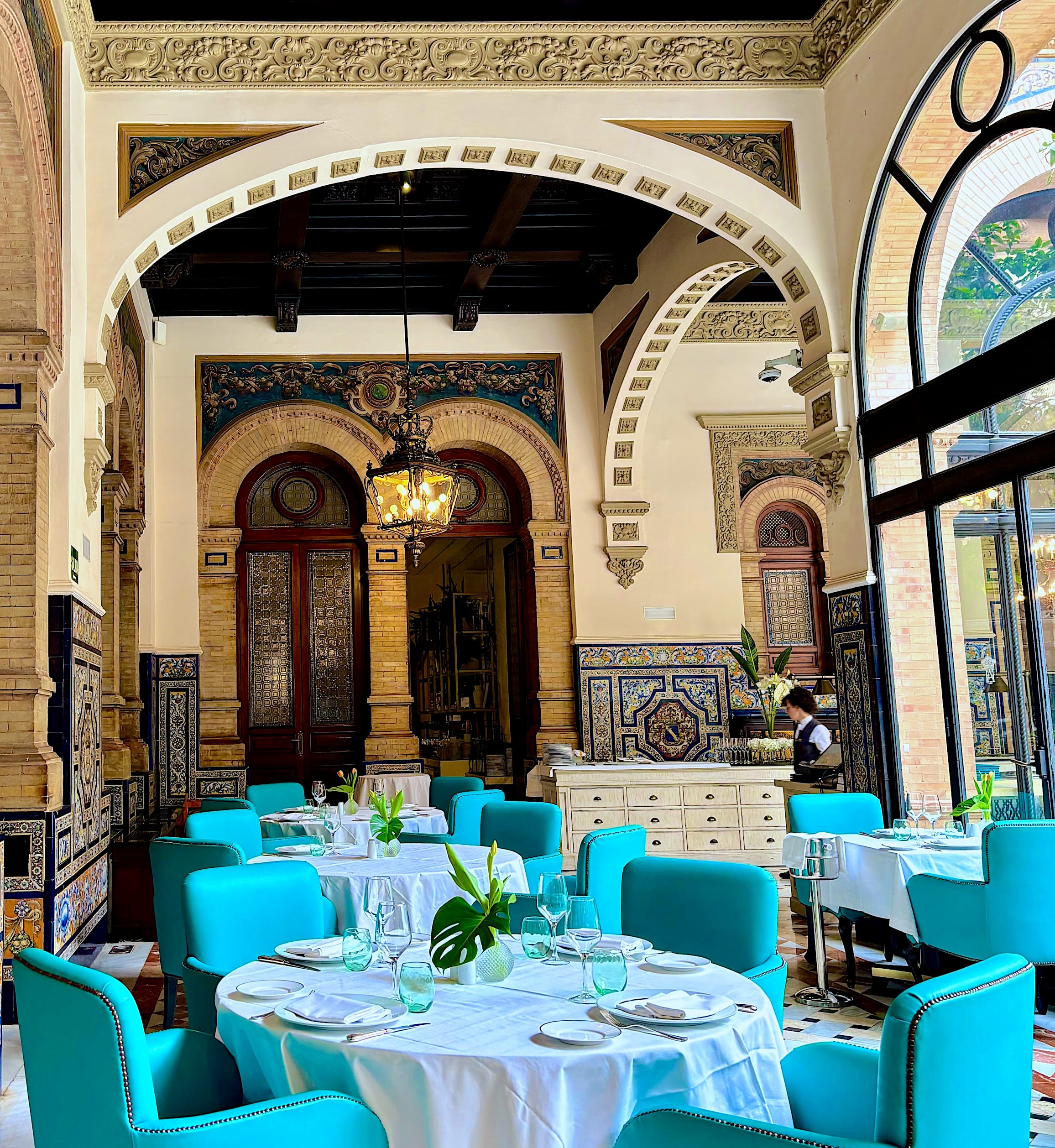
Restaurante San Fernando showcases the refined touches and distinctive architecture of Hotel Alfonso XIII in Seville. (Adrian Brijbassi photo for Vacay.ca)
A time machine of sorts, Bar Americano’s doorway serves as both a divider between it and the hotel’s formal restaurant and a portal back to the mid-20th century. Before the groovy band arrives, guests can wander the long, swanky lounge with carpet patterned in a design resembling half shells, or perhaps they look like folding fans that pre-dated air conditioning, velvet curtains where musicians are cloistered behind, and calming blue tones that set the mood for the music. Black-and-white photos of stars (Orson Welles, Grace Kelly, Ernest Hemingway, of course) who stayed at the hotel are fastened to the walls. Best of all is the cocktail menu.
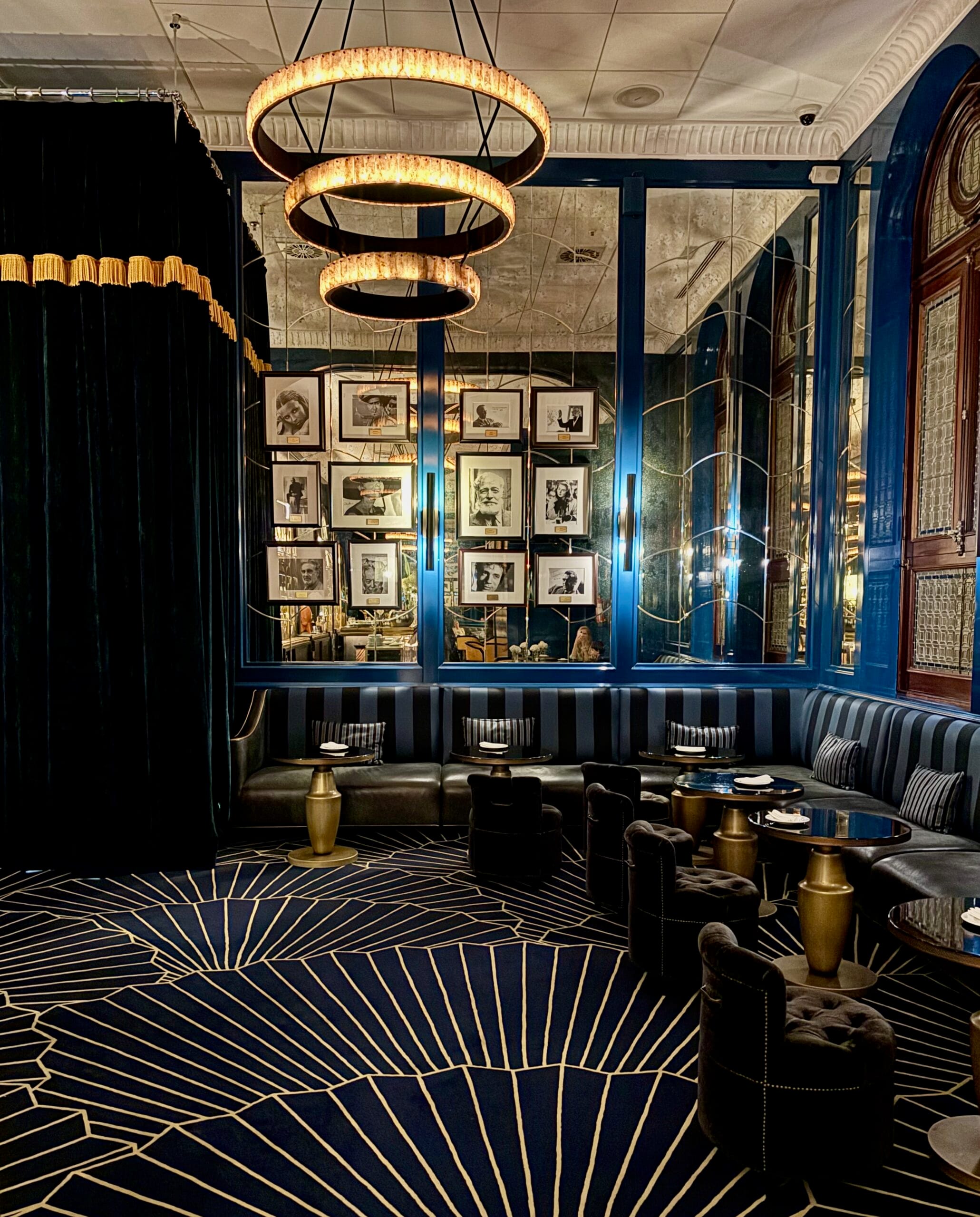
Seville’s Bar Americano remains enduringly stylish after nearly a century of serving great cocktails to patrons from near and far. (Adrian Brijbassi photo for Vacay.ca)
In today’s age, where bartenders use science, lab work, and a spirit of invention to create drinks, Bar Americano’s emphasis on timeless classics is refreshing. Feel like an unfussy Negroni, old-school Gimlet, or long-lost Boulevardier? You can sip one at the bar or in a soft comfortable chair while an Ella Fitzgerald recording plays in the background and feel like you’ve gone back decades.
It’s an effect I felt often at Hotel Alfonso XIII. Built in 1928, the hotel was commissioned by its namesake king for the 1929 Ibero-American Expo that saw Latin countries from the Western Hemisphere congregate in Europe for the first time. That event endures as a legacy in Seville and the halls of the revered hotel.
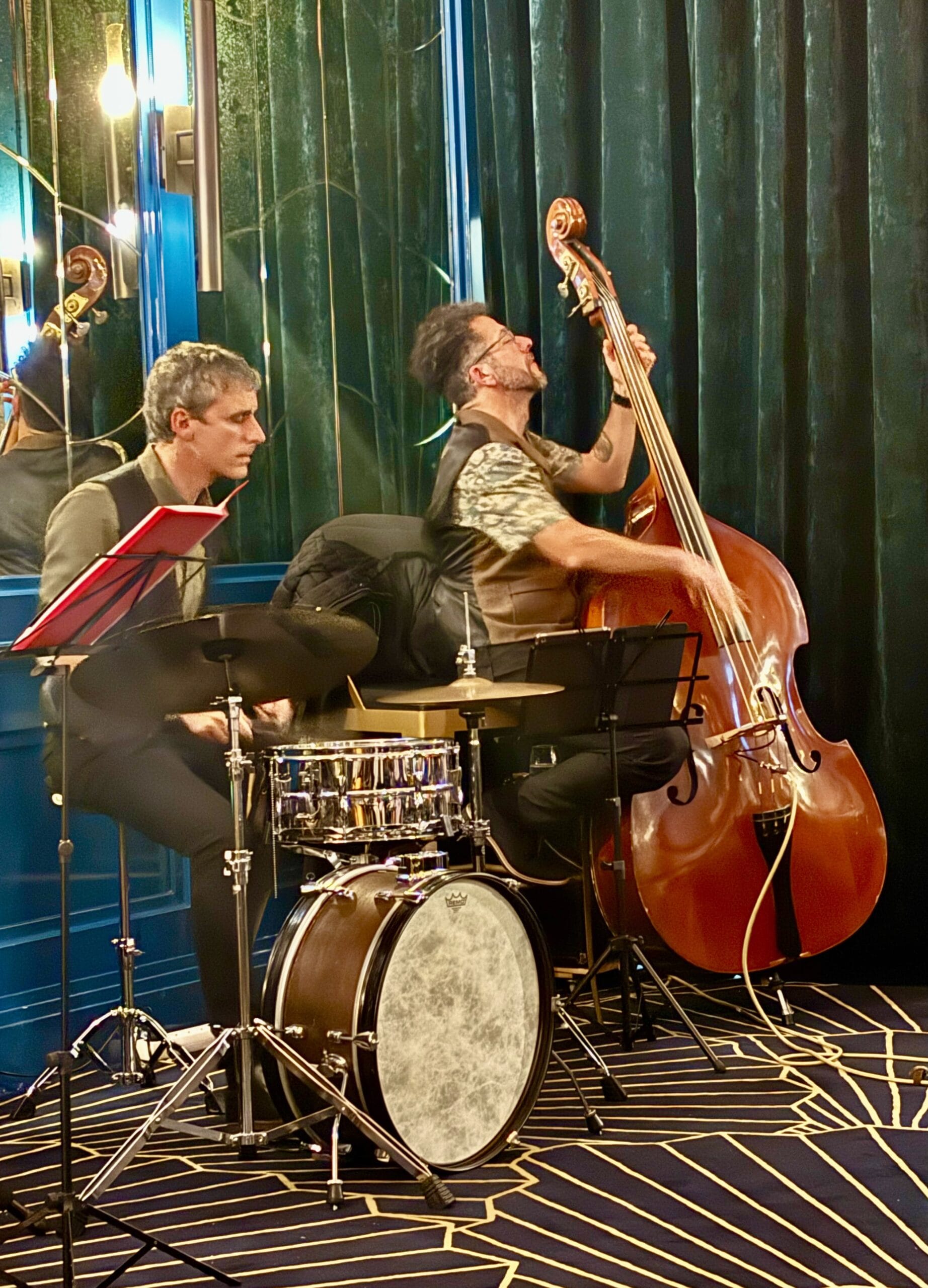
Jazz musicians add to the classic vibe at Seville’s Bar Americano. (Adrian Brijbassi photo for Vacay.ca)
Managed by Marriott, the property is part of the hotel conglomerate’s Luxury Collection and is owned by the City of Seville. It’s a fascinating relationship between a brand known for its pampering of guests, including the provision of leading amenities, and a government entity mandated with maintaining the property’s historic features. As a result, the walls and decor of common areas, including the lobby, remain largely unchanged from 1928, when the hotel was opened for its first major event: the wedding of King Alfonso XIII’s niece. Any necessary renovations or upgrades to those areas need to retain the heritage look as closely as possible. The rooms are freshly updated, though, and include exquisite beds, glamorous marble bathrooms, and outlets for today’s electronic needs.
As beautiful as the rooms are, the best part of the hotel is wandering its common spaces, including Bar Americano and Restaurante San Fernando. While the former will enchant you with its ambience and flavours of yesterday, the latter will impress with its use of contemporary cooking techniques. Seeking a dish distinct to Andalusia, I opted for Pintada, which is guinea fowl.
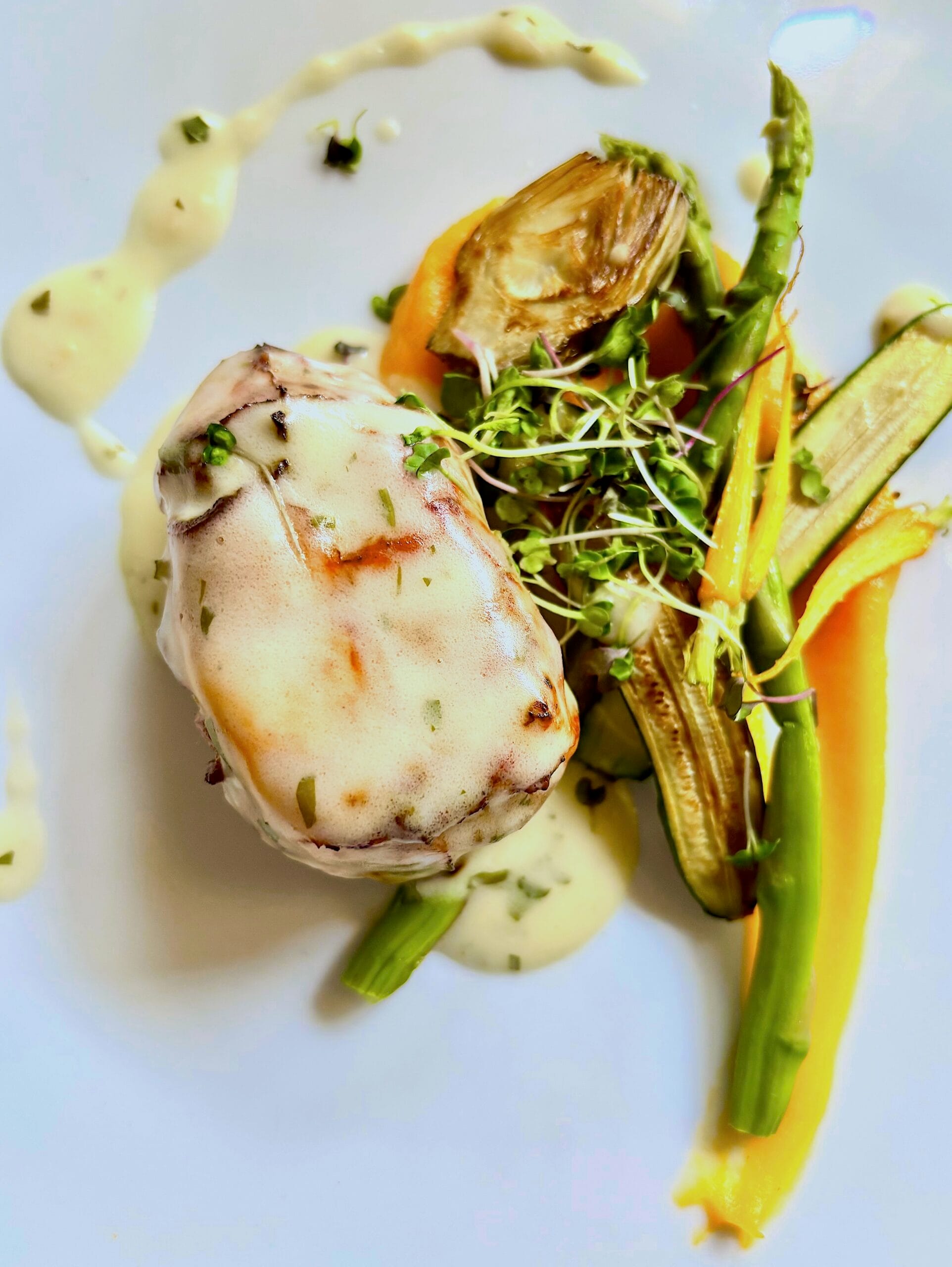
Guinea fowl, with roasted vegetables, is one of the highlight dishes at Restaurante San Fernando inside of Hotel Alfonso XIII. (Adrian Brijbassi photo for Vacay.ca)
At Restaurante San Fernando, it is stuffed with a mousse of foie gras and mushrooms, and accompanied with creamy sweet potatoes and roasted vegetables. It’s decadent, though sensibly portioned so you can savour every bite, and have room for the Manchego cheesecake at dessert. A marvellous olive-oil service, where three types of extracts are served with a choice of housemade breads, adds another refined touch to a hotel replete with them.
The icon will celebrate its centennial in 2028 and although plans for the occasion have yet to be announced it’s a certainty they will include lavish ceremonies and a party atmosphere for several months. Hotel Alfonso XIII is the landmark accommodations property in Seville, meaning its 100th birthday will be recognized throughout the city centre, too.
View this post on Instagram
A pleasant and sublime place, Seville is also one of Iberia’s most important destinations. It was conquered by Moors in 712, when the city was known as Isbiliyya, and attracted artisans, sculptors, writers, and tradespeople. It maintained its cultural significance after it was taken over by Christians in 1248 and broadened its commercial significance through cross-Atlantic trade in the 17th and 18th centuries. Along with the hotel, Plaza de Espana, the Alcazar, and the Seville Cathedral are all attractions worth exploring in the historic centre.
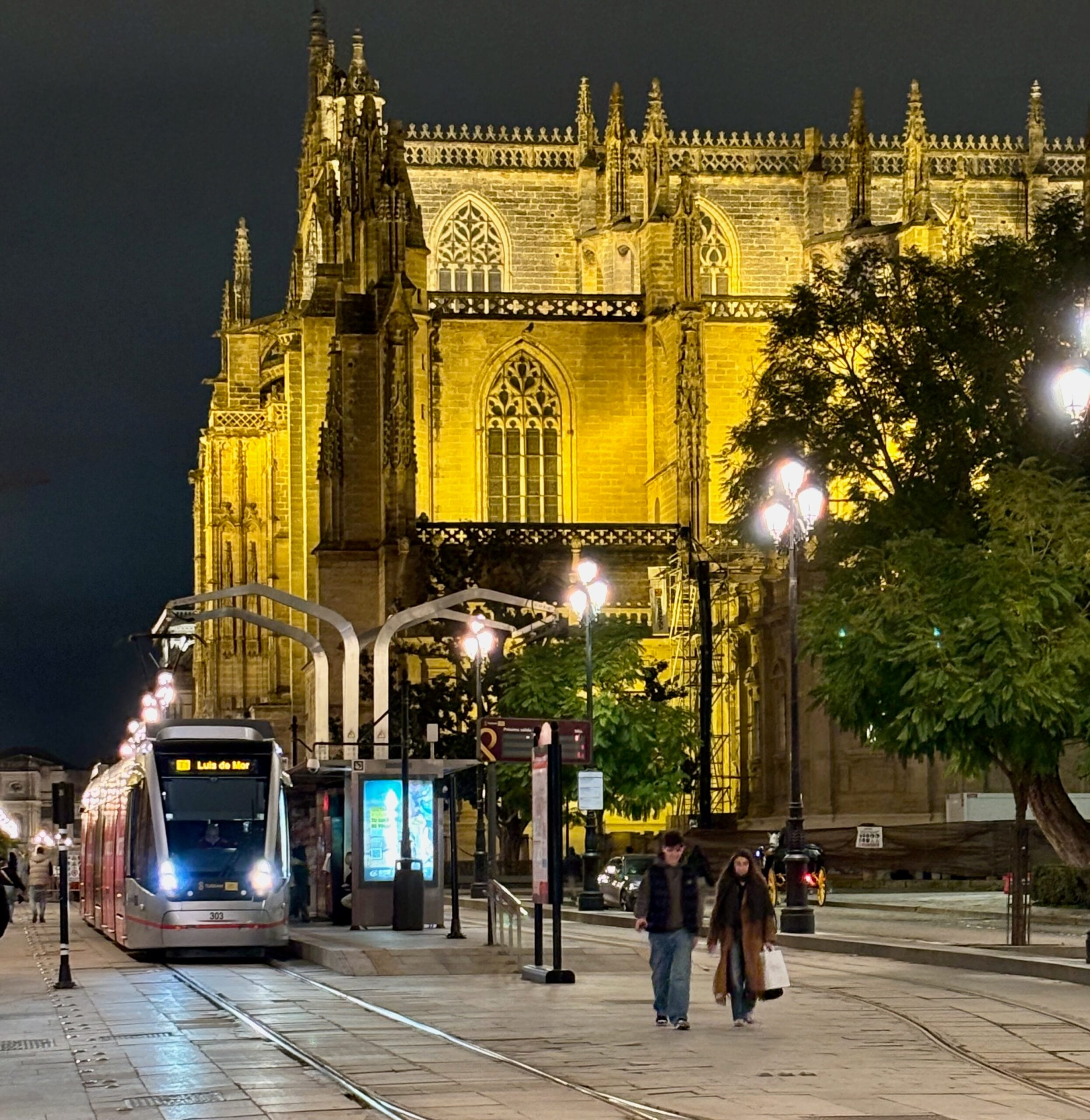
Seville features modern amenities and centuries-old attractions, including the city’s magnificent cathedral. (Adrian Brijbassi photo for Vacay.ca)
The Gothic cathedral was built during a 117-year period from 1402-1519, and has been renovated numerous times since. It’s down the street from Hotel Alfonso XIII and is surrounded by popular bars and restaurants. Although driving in the historic part of Seville, like in other older parts of Spain, can be confounding because of narrow and one-way streets, the city has a number of modern roads that are well-maintained and easy to navigate.
That infrastructure makes Seville a choice place to base your stay in Andalusia, or a launching pad to explore more of the region. Here are some other parts of the autonomous region to check out.
Explore Andalusia Beyond Seville
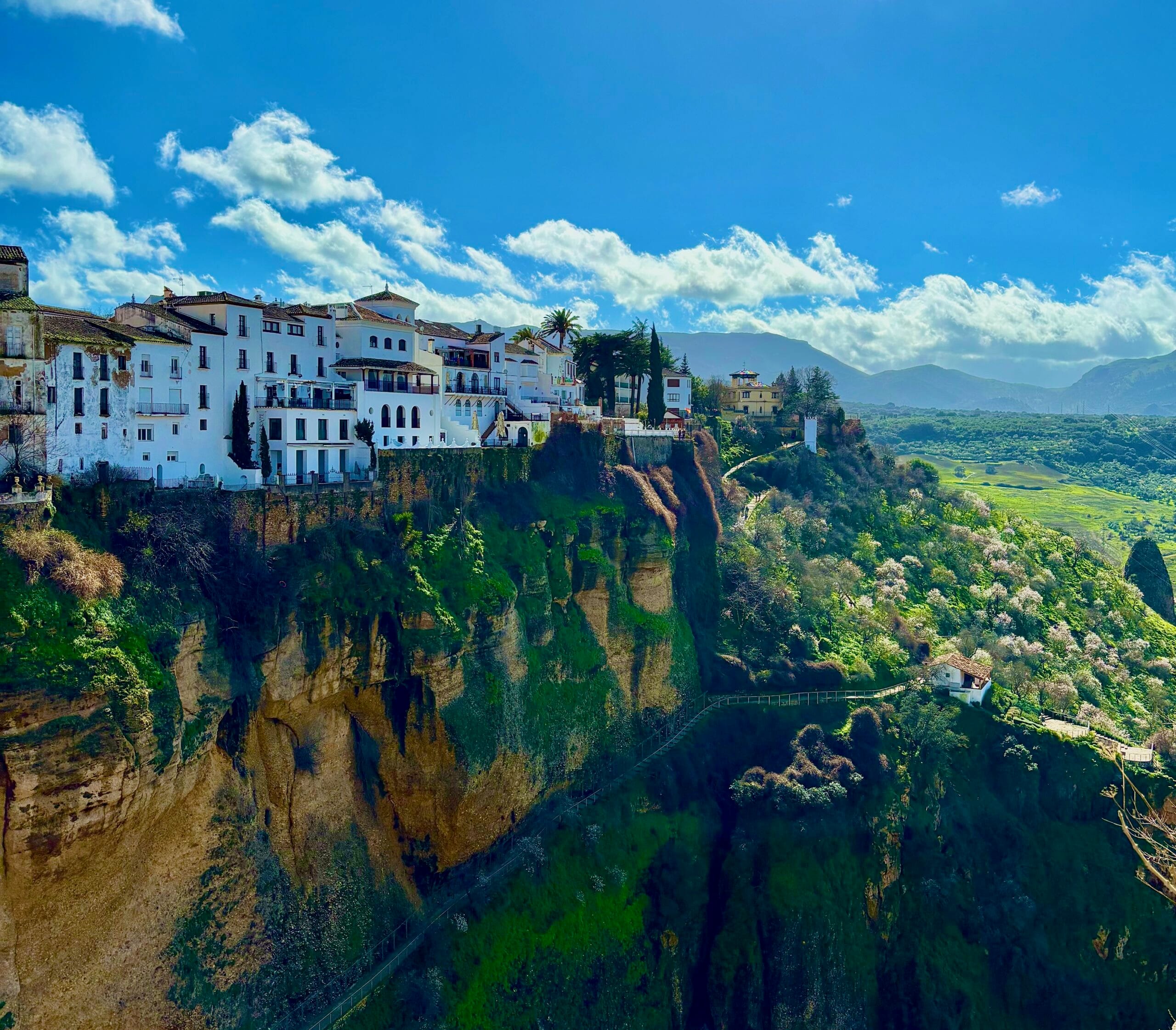
Clifftop-dwelling Ronda is a worthwhile day trip from Seville. (Adrian Brijbassi photo for Vacay.ca)
RONDA: The drive from Seville to cliff-hanging Ronda is one of the most magnificent in Europe. On a sunny day, I drove past hills of olive tree orchards, Roman ruins, and farms with grazing sheep and horses. In the distance the snow-capped Sierra Nevada mountain range exemplified the diversity of Andalusia’s landscape and its scenery. The 90-minute drive led up and up and up to Ronda, a stunningly beautiful city of approximately 35,000 people. With its stark white stucco walls and dramatic drop from building foundations down to the vineyard-laden valley, it reminded me of Minas Tirith, the famous fictional city in “Lord of the Rings” with buildings the colour of a cloud.
View this post on Instagram
More than 750 metres (2,460 feet) above sea level, Ronda sits on the Guadalevín River and the El Tajo gorge it formed. The city is a busy tourist destination, but it’s not touristy. It’s not rife with cheap trinkets and street sellers. You’ll find quality cafes and restaurants and beautiful panoramic views that will stop you as you move from one elevated location to another. A bridge separates Ronda into east and west districts, both lovely to explore. For a pleasant meal, stop at Palacio de Hemingway and its Pura Cepa restaurant. Again, despite the name, it’s not touristy like so many other places in the world named after the famous writer. The Palacio’s restaurant serves outstanding locally sourced food and a quality selection of Andalusian wines. The Markiss Sauvignon Blanc was worth every one of the 15 euro I paid for a glass and the anchovies were a delightful midday snack. The restaurant features a typewriter with a page from “The Old Man and the Sea”, written in Spanish, that complements the literary aesthetic.
NERJA CAVES: An utterly fascinating expanse of natural stalactites and mineral-rich sculptures, these caves on the coast are a must-visit. Discovered by happenstance in the 1950s when a group of adventurous boys tumbled into the wondrous subterranean world while in search of bats, the Nerja Caves are a candidate for designation as a UNESCO World Heritage Site. Artifacts were found that indicate humans existed in the caves as far back as 25,000 BCE! The place, which has 12 caves in all, feels unreal even as you gaze on the walls and columns that are tangible to the touch.
GRANADA: About one hour north of the Nerja Caves and two hours east of Seville is the home to the famous Alhambra, a 14th-century Moorish palace that is one of the continent’s great landmarks. The attraction is filled with gardens, three palaces, and immaculate viewpoints.
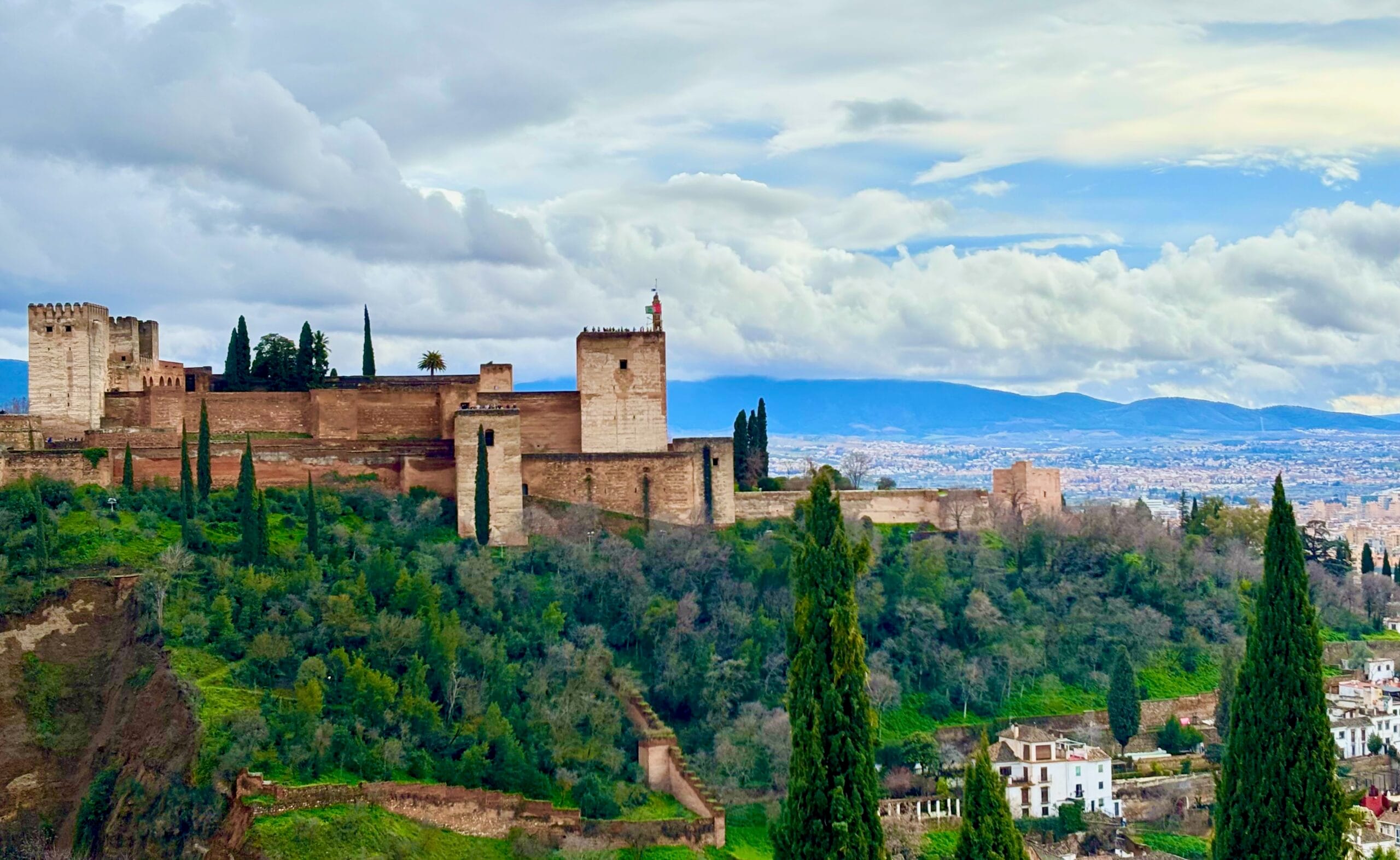
The Alhambra palaces overlook the Andalusian territory in Granada. (Adrian Brijbassi photo for Vacay.ca)
It also dominates the city, visible from around Granada in a way similar to Mont St. Michel in Normandy. Worth the exploration, for sure. The Áurea Washington Irving Hotel is the place to base your stay as it is one block from the entrance to the Alhambra.
MALAGA: With architecture similar to Valencia and Barcelona, Malaga is a mostly serene city on the Mediterranean. You can access its beach, tour its fortress, and explore its shops. One of the most English-influenced cities in Spain, Malaga is extremely easy for Canadians to get around. It hardly seems foreign because of the familiarity of the language and many of the brand-name stores. [Read More: Why Malaga is the Ideal Spanish City to Practice Your Spanish]
MORE ABOUT HOTEL ALFONSO XIII
Location: Calle San Fernando, 2, Caso Antiguo, 41004 Sevilla, Spain (see map below)
Room Rates: Nightly rates for a weekend stay in May start at 1,236 EUR (approximately $1,980 CAD), based on a recent search of the hotel’s booking engine; rates vary based on day and season of visit.
Note: Vacay.ca will occasionally publish content outside of Canada. As Canadians seek sun destinations outside of the U.S., Managing Editor Adrian Brijbassi will be producing content from Spain and Latin America, including this article focused on the province of Malaga.