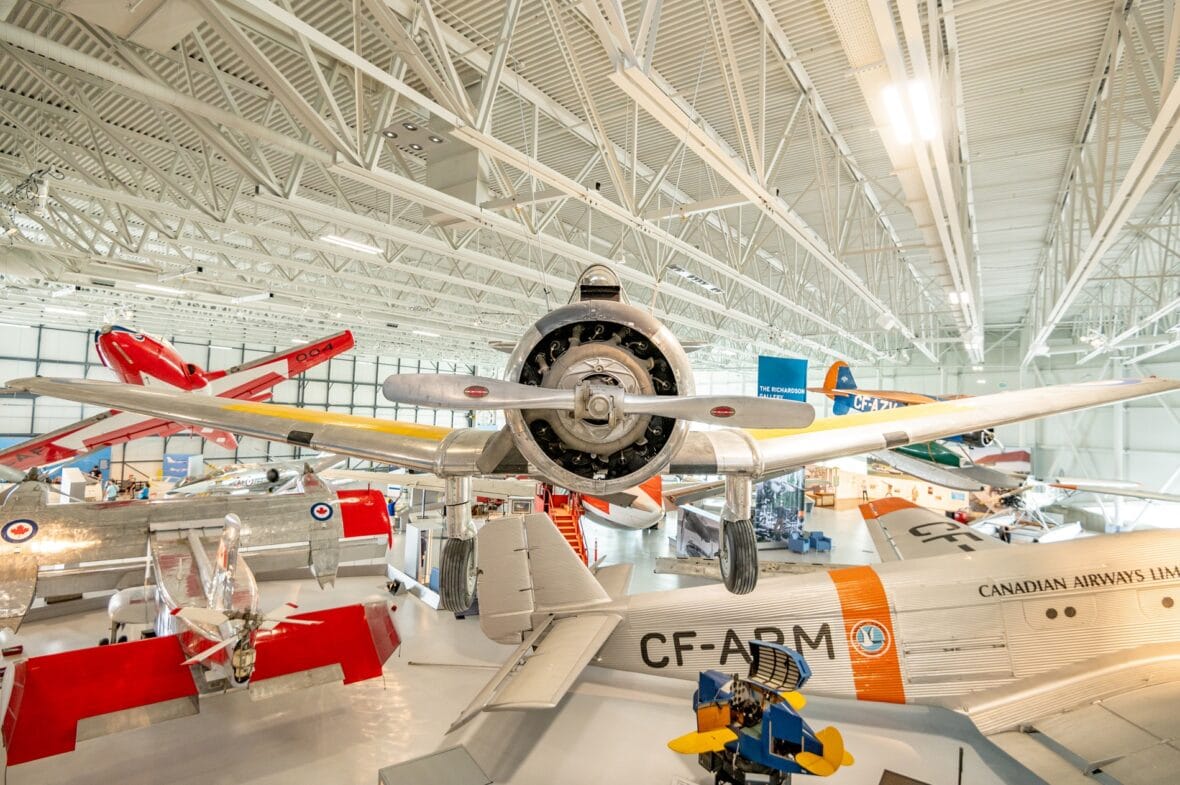

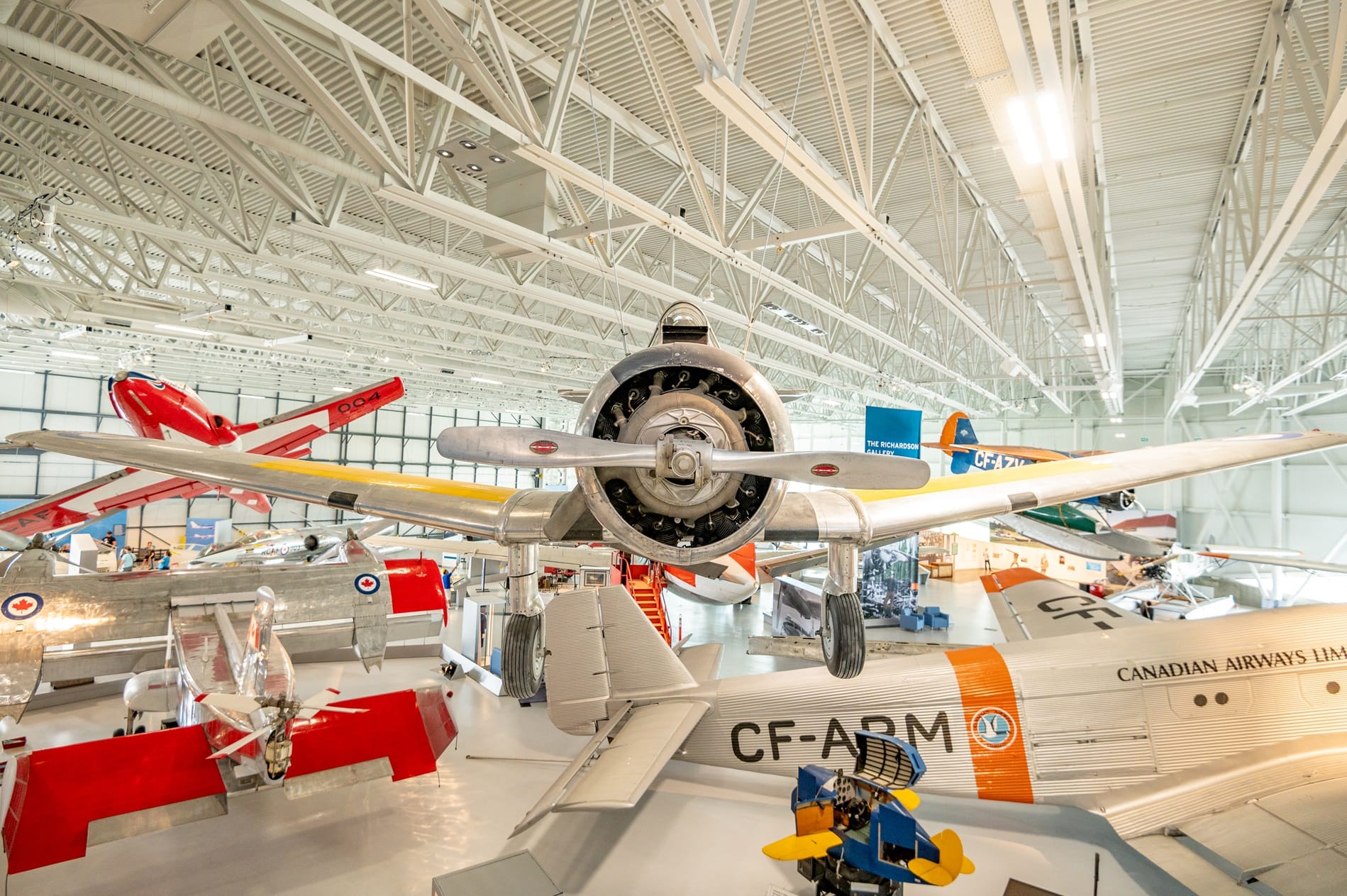
Royal Aviation Museum of Western Canada is home to a collection that covers more than 100 years of the nation’s history of flight. (Photo courtesy fo Nik-Rave/Royal Aviation Museum of Western Canada)
Of all the magnificent aircraft at Royal Aviation Museum of Western Canada (RAMWC) in Winnipeg, it’s surprising that the plane that grabbed my attention was the Air Canada Vickers Viscount.
Every plane at RAMWC has a story but it was the Vickers Viscount VC2 (Model 757) CF-THS that connected with me in a way no other aircraft did. The plane, the world’s first turboprop airliner and first turbine-powered aircraft to enter scheduled service in North America, made its initial flight on July 16, 1948 before being retired in 2009.
I was surprised by how the Vickers took hold of my imagination because I’m sure that I have never flown in one and it certainly isn’t the fastest or slickest plane on display. Regardless, the plane — a throwback to a previous generation when aircraft didn’t have WiFi or online entertainment — brought back memories of an excited five-year-old boarding in Toronto with my family on his first flight to see my aunt get married in St. Kitt’s.
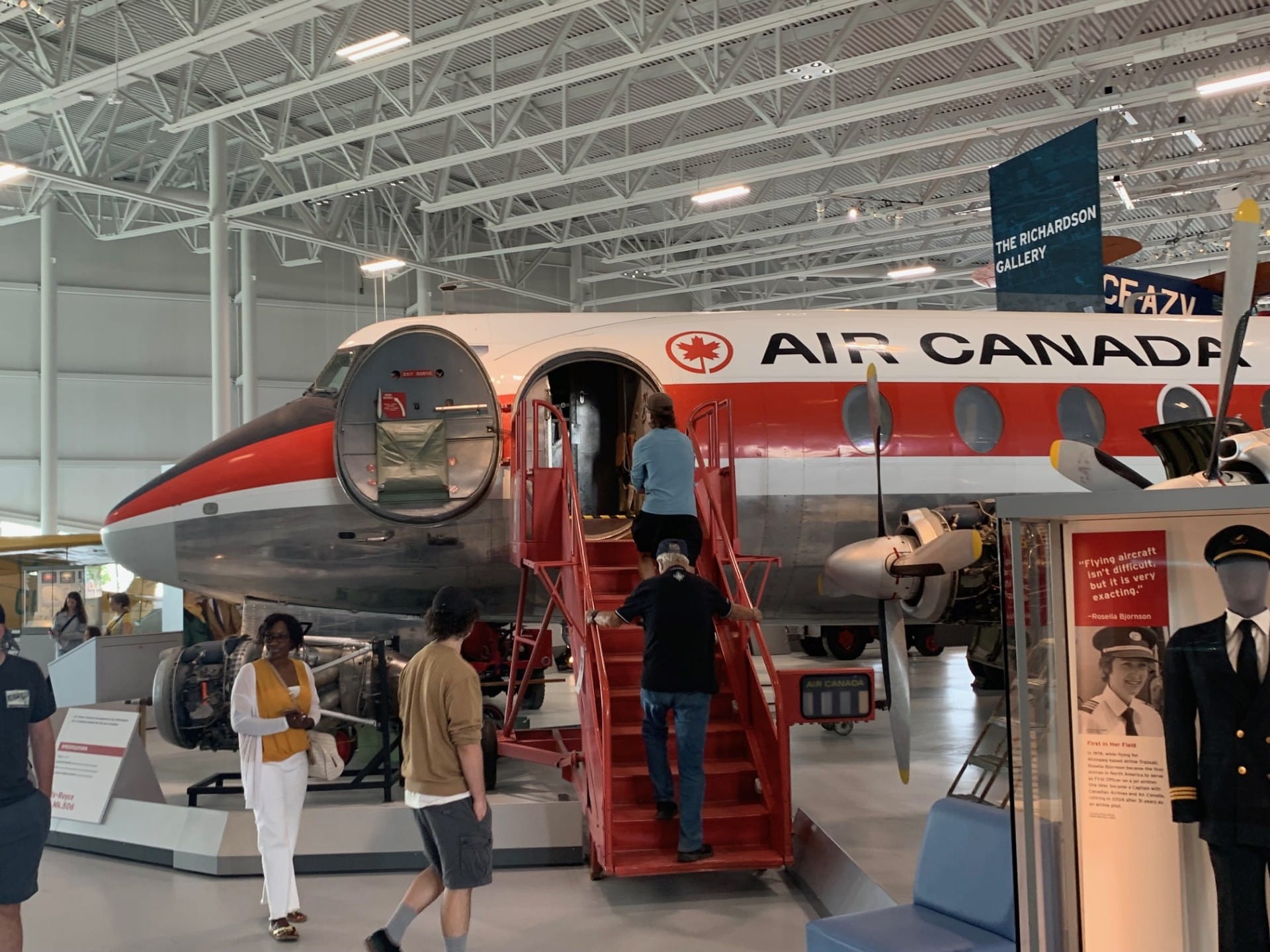
Visitors at Royal Aviation Museum of Western Canada board the Air Canada Vickers Viscount VC2 (Model 757) CF-THS. (Rod Charles photo for Vacay.ca)
“It is a popular exhibit! Earlier aircraft were rarely built for comfort, but the Viscount was the height of luxury in its day. Every passenger flew first class,” said James Mitchell, Marketing Specialist & Graphic Designer at RAMWC. “Overhead luggage bins weren’t yet standard, but there was dedicated space for men’s and ladies’ hats. We’re currently working on enhancing the Viscount and plan to install new interior displays that highlight the aircraft’s history. Our Vickers Viscount was given some alterations by Canadians for Canada, to handle our extreme winter weather.”
Winnipeg Aircraft Museum a Top Attraction
As I walked through the Vickers, long-forgotten memories came soaring back. I remembered my mom carefully buckling me into my seat. I remembered the flight and a soft landing. I also remembered a nice man — who identified himself as a pilot — giving up his seat by the window so that I could have it. I remembered a smiling stewardess serving me a chicken dinner on a tray that magically folded down out of the seat in front me — delicious, fresh, flavourful, moist and hot —five words that rarely describe airplane food today.
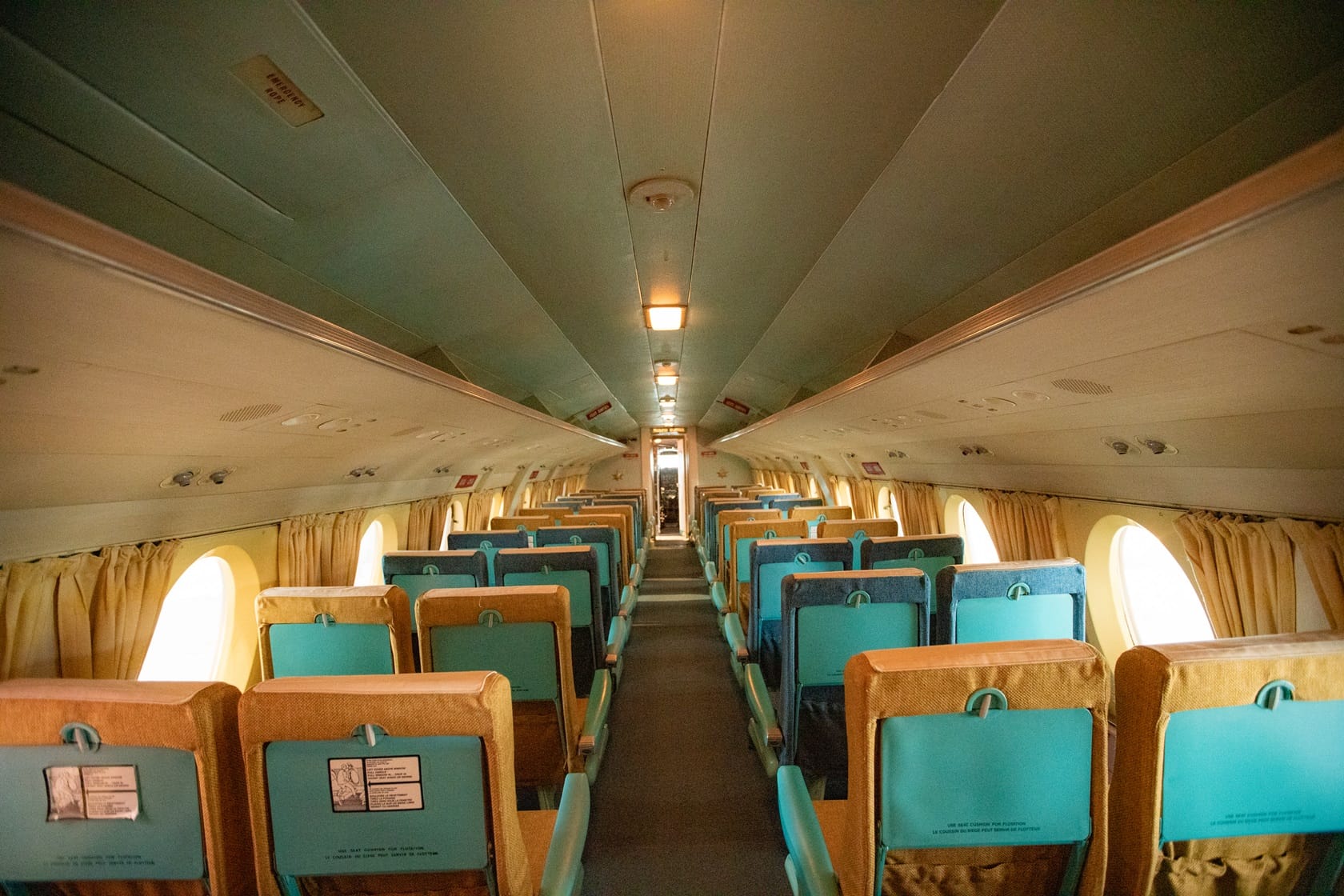
The Viscounts destined for the Trans-Canada Air Lines fleet were adapted to cold-weather operations, and as Canada had similar operations regulations to the U.S., this was seen as a step toward Trans-Canada Air Lines entering a difficult market south of the border. (Photo courtesy of Royal Aviation Museum of Western Canada)
That Air Canada Vickers Viscount wasn’t just a display it was a time capsule filled with stories. I wondered how many prime ministers, NHL players, famous actors, artists or inventors had sat in those seats, enjoying the ride, eagerly awaiting to land at their destinations. Or more realistically perhaps, how many ordinary, excited children like myself had been in the seats, noses pressed against the window, enjoying the delicious, fresh, flavourful, moist and hot airplane food.
“It’s always fascinating how many visitors have personal connections to specific aircraft. My personal favourite is the Fairchild Super 71. It’s the only one of its kind remaining in the world,” said Mitchell. “It placed the pilot at the rear of the aircraft to potentially increase space for cargo or passengers — though this also created some serious challenges. Ours was recovered from a crash and painstakingly restored to what you see on display today.”
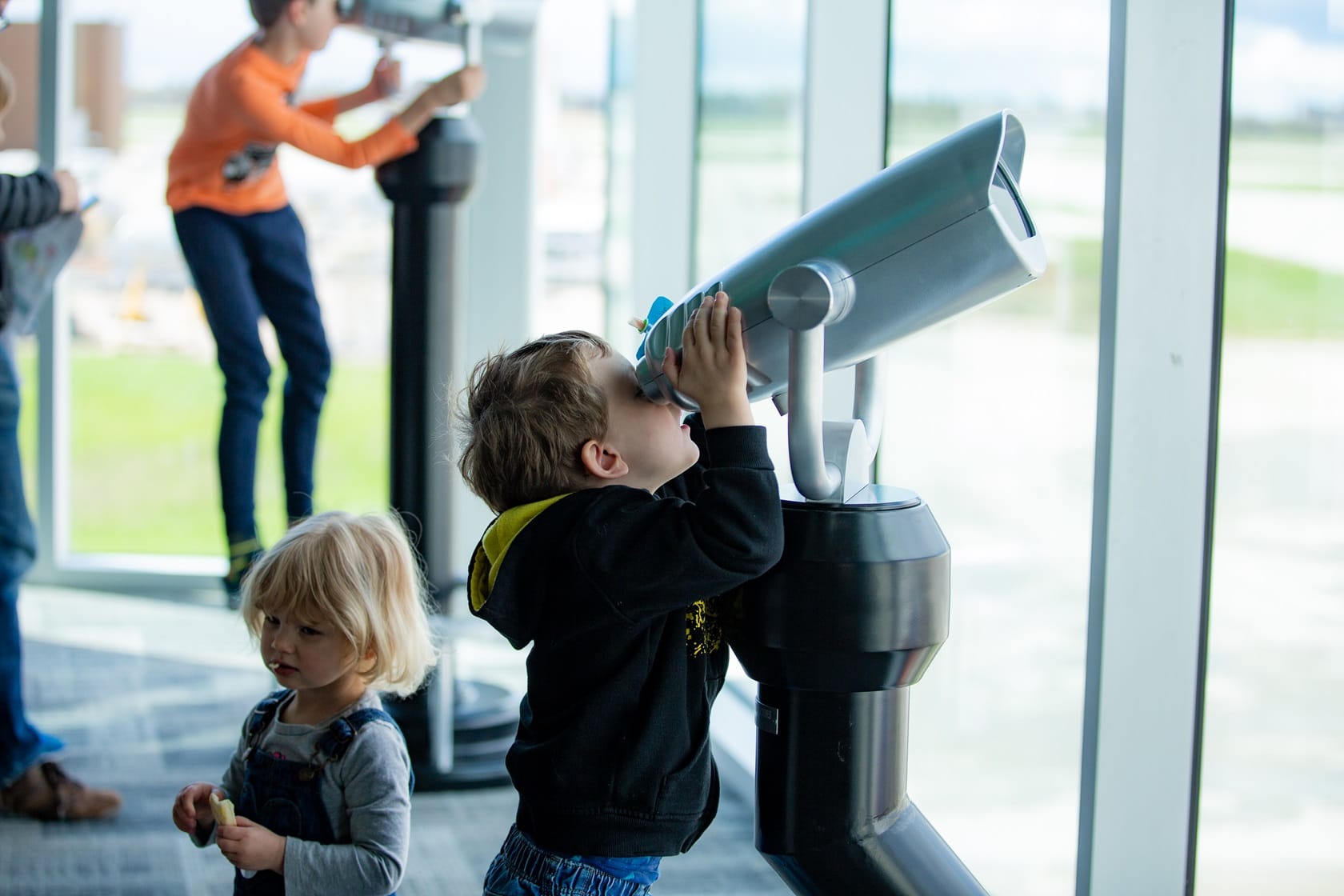
One area of the museum children will love is the Observation Lounge, which has outstanding views of Richardson International Airport. (Photo courtesy of Royal Aviation Museum of Western Canada)
Every Plane Has a Story
With more than 100 years of Canada’s aviation history on display, the museum has one of the nation’s largest and most historically significant aviation collections. The number of aircraft on display change from time to time and are often rotated to accommodate new displays. During my visit, there were 20 aircraft on the floor and six suspended from the ceiling. There is also a dedicated play zone for children and an observation lounge with views of Winnipeg Airport runways where visitors can hear live tower communications. It also includes a set of interactive cameras offering different viewing angles from around the airport grounds.
“The RAMWC has been an icon in Manitoba for a generation,” RAMWC CEO Peter George said. “With the museum’s beautiful new home at the Winnipeg Richardson International Airport, the sky’s the limit in how we can elevate its profile and celebrate the rich history and future of aviation in Canada.”
Education and inspiration are central to RAMWC mission. They have three certified teachers delivering an award-winning, STEM-based educational programs. Many students leave inspired to pursue aviation and aerospace careers and young volunteers have gone on to become aircraft mechanics and more, supported by the mentorship of retired industry volunteers. The museum recommends visitors take a tour with one of its guides, who are passionate about aviation. Several guides at RAMWC are retired civilian and RCAF pilots.
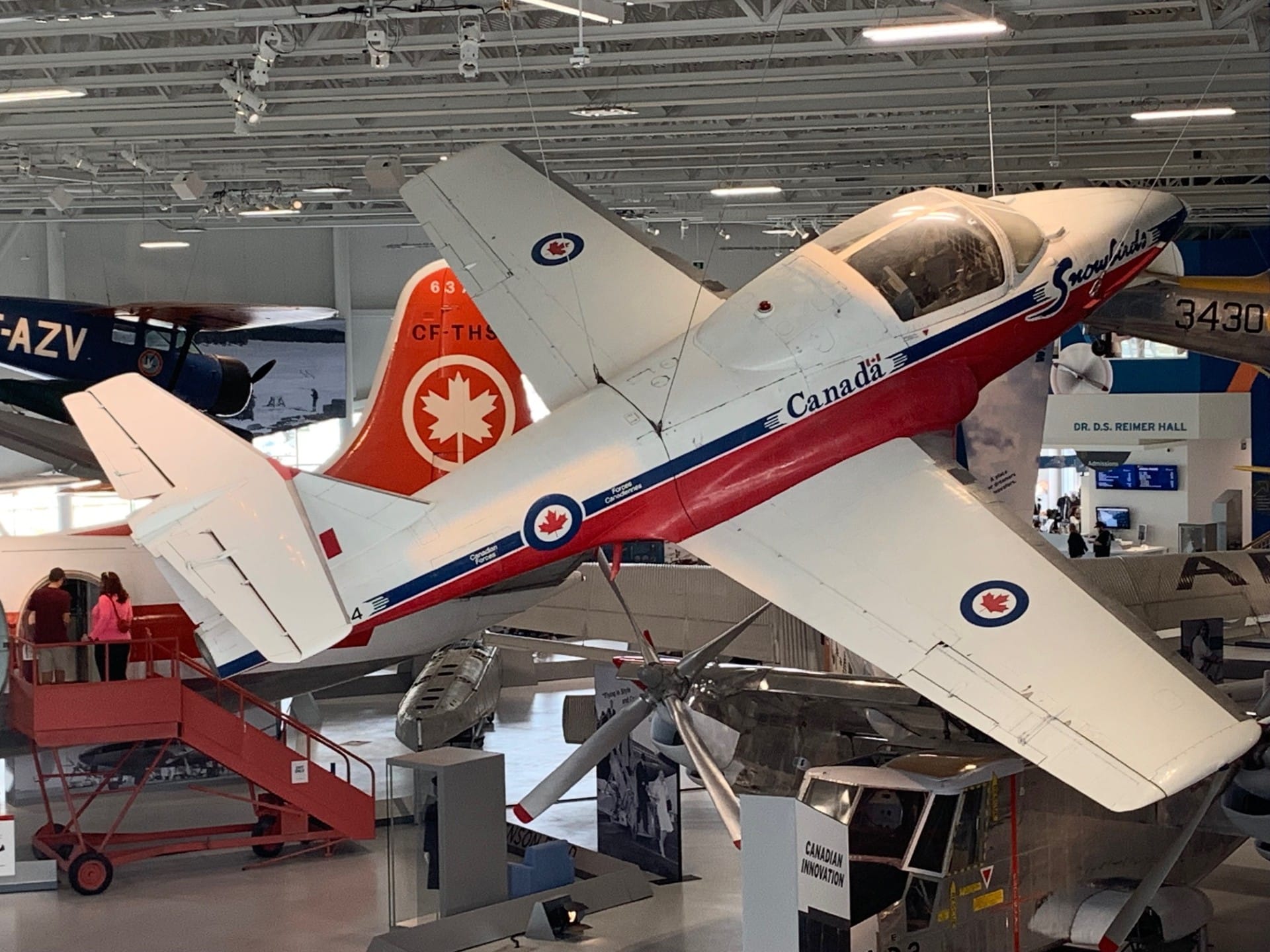
The Canadair CL-114 Tutor RCAF is an aircraft fans of the Snowbirds know well. Introduced in 1960, the Tutor was designed by Canadair to serve as the Canadian Forces’ primary jet trainer. (Rod Charles photo for Vacay.ca)
Canadian visitors will connect with the Canadair CL-114 Tutor RCAF. In 1971, the Tutor was adopted as the official aircraft of 431 Air Demonstration Squadron, better known as the Snowbirds. These aircraft were modified for aerobatic displays by fitting them with external tanks for diesel fuel, which is injected into the engine to produce smoke trails. As I gazed on this piece of Canadian history I recalled many summers at the Canadian International Air Show in Toronto, where the Snowbirds are always the closing act.
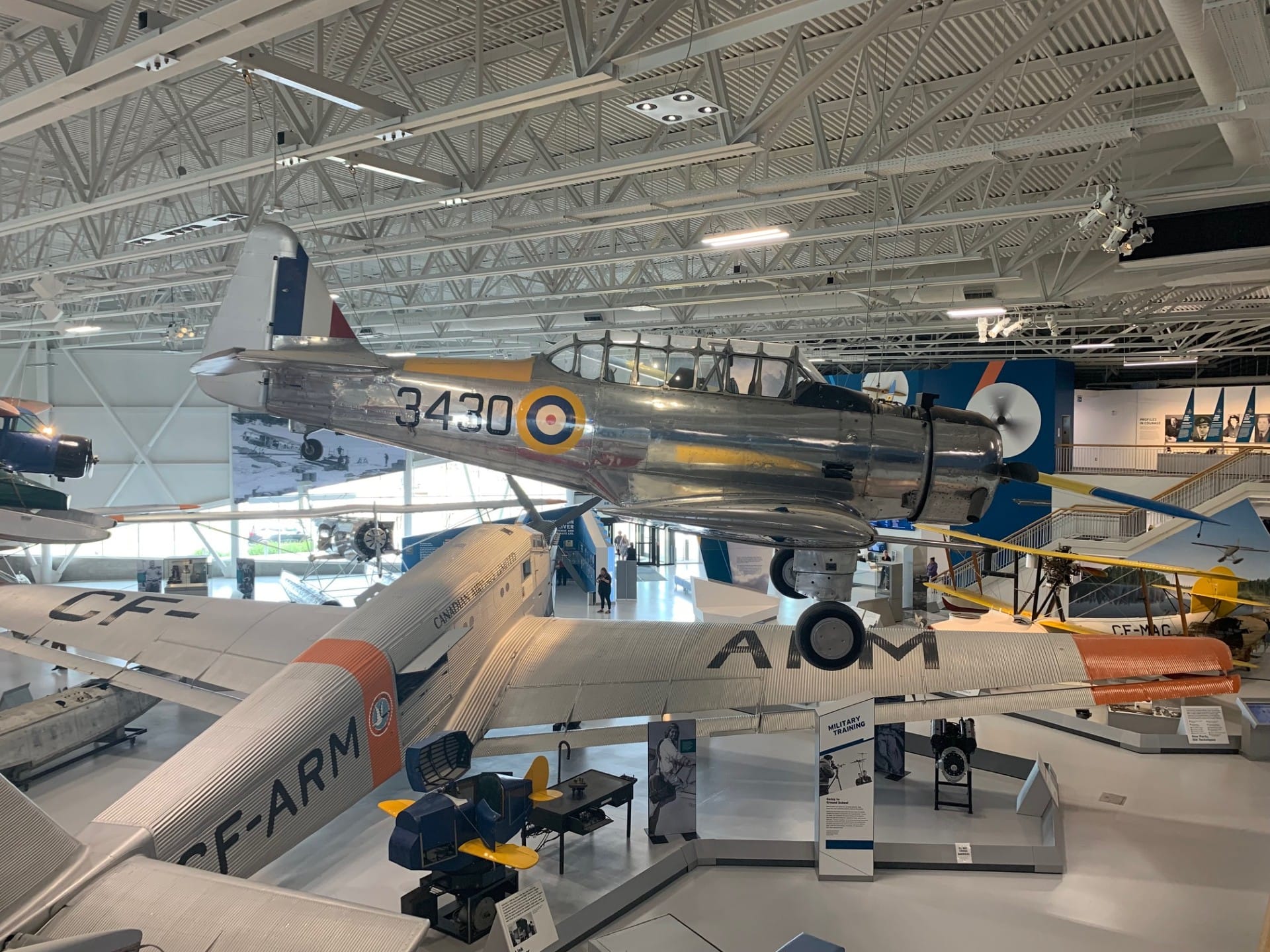
The RCAF North American NA-64 Yale. The Yale was part of a long series of successful training aircraft produced by North American Aviation, including the more famous Harvard. (Rod Charles photo for Vacay.ca)
Get to Know Winnipeg’s Other Kind of Jets
The excitement didn’t stop there. I was also able to see a Canadair F-86 Sabre Mk. 6, North American NA-64 Yale RCAF and the Canadair CL-84 Dynavert during my visit. One standout at RAMWC is the Junkers F-13, City of Prince George. Recently returned from a 20-year loan to a Berlin museum, it’s one of only five remaining worldwide — the only one in Canada and the only one on floats.
Another group of planes that will inspire true Canadians are the bush planes, including the de Havilland Beaver C-FMAA, which flew with the Manitoba Government Air Service. Mitchell says bush flying is at the heart of Canadian aviation history.
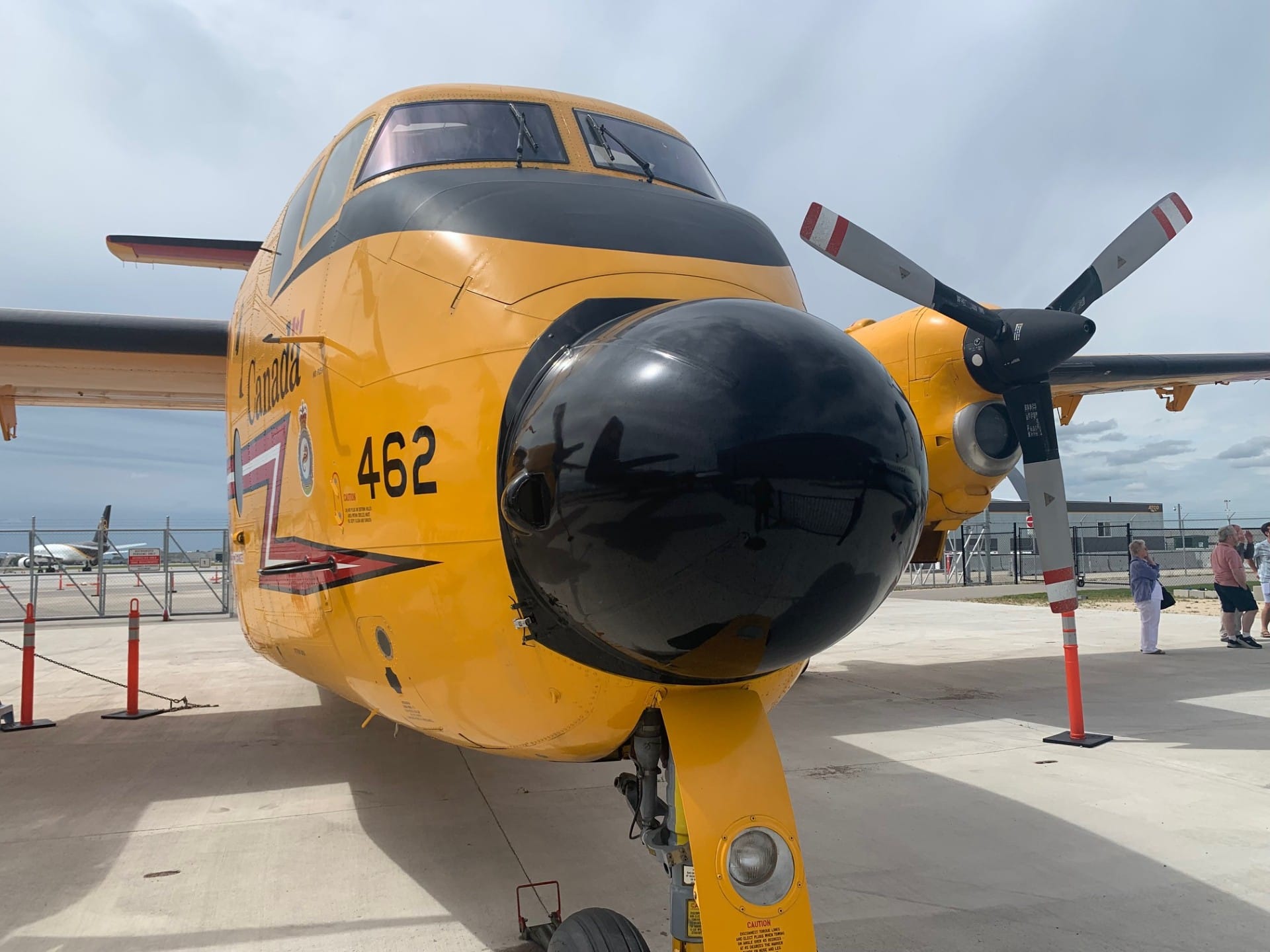
In 1975, RCAF Buffalos, built by De Havilland Canada, were retired from the tactical airlift role and used for domestic search and rescue (SAR) duties. (Rod Charles photo for Vacay.ca)
“These aircraft opened up the North, connecting remote communities and transforming the country. We have one of the most extensive bush plane collections in the world,” says Mitchell. “Our Fokker Universal, G-CAJD — known as the “Ghost of Charron Lake” — was recovered after a 1931 crash and decades of search efforts, which included multiple dive attempts and searches with underwater ROVs. The search and recovery is detailed in a film that plays alongside the exhibit. The Bellanca Aircruiser in our collection is one of only two remaining worldwide.”
Some aircraft have participated in combat roles. During my tour, a visiting Lancaster Bomber was on the floor, which appeared as part of RAMWC’s summer aircraft program. The museum frequently hosts visiting aircraft — from vintage WWII planes to modern aircraft.
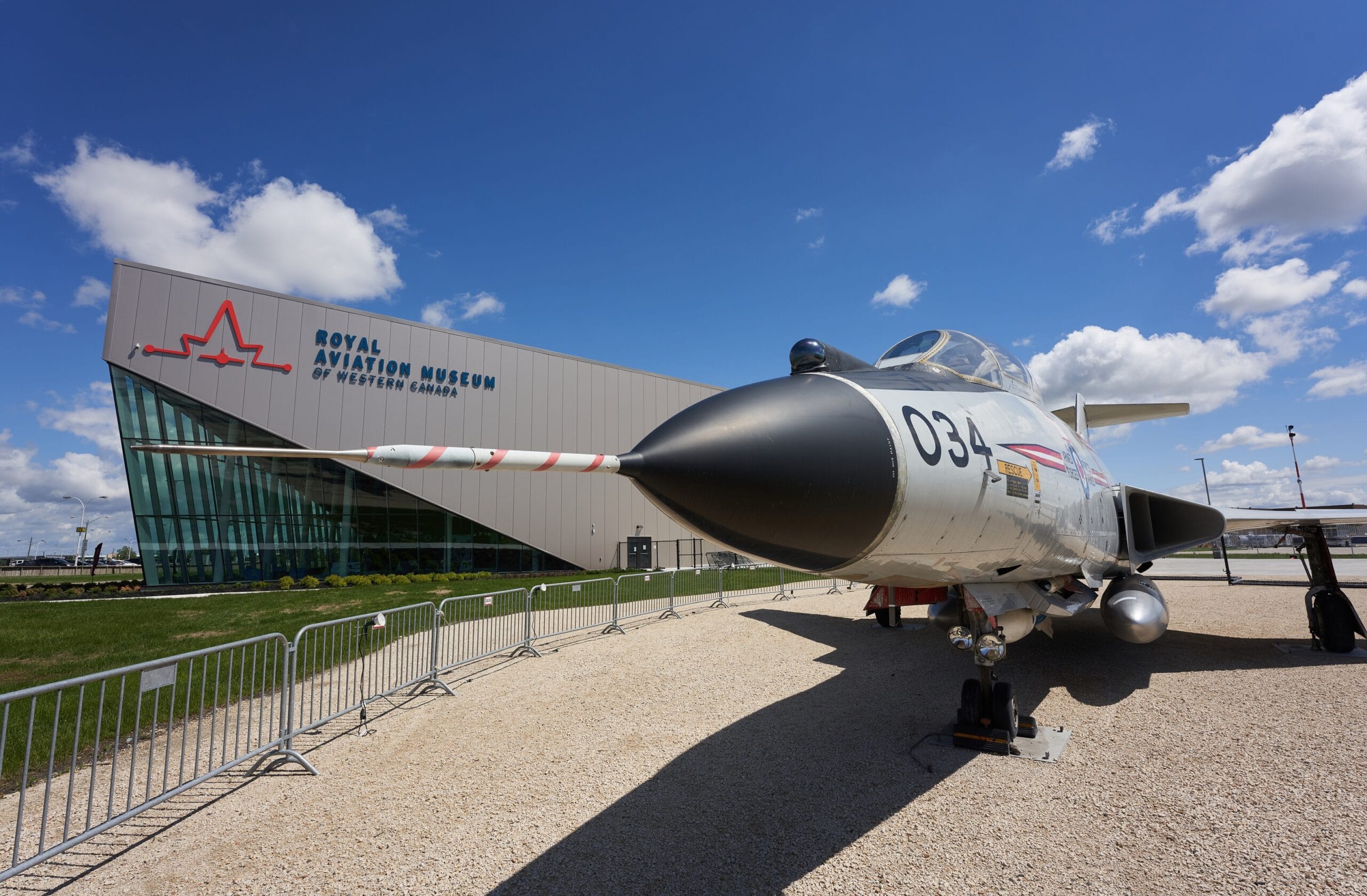
At 86,000 square feet, the museum houses more than 20 aircraft, 14 galleries, meeting rooms, classrooms, a boutique gift shop, and an observation lounge overlooking active runways. (Photo courtesy of Royal Aviation Museum of Western Canada)
“The Royal Aviation Museum of Western Canada is all about storytelling. Facts and figures are important, but what truly resonates are the experiences — the excitement, in some cases, the danger, and the possibilities that aviation represents,” Mitchell said.
No argument there. The museum is all about cool planes and the stories about them. Some of those tales may not be in the museum, as I found out. They could be unique to you and the flights of your own imagination.
MORE ABOUT ROYAL AVIATION MUSEUM OF WESTERN CANADA
Website: royalaviationmuseum.com
Address: 2088 Wellington Avenue, Winnipeg, Manitoba
Phone: (204) 786-5503
Email: info@RoyalAviationMuseum.com
Prices: royalaviationmuseum.com/plan-your-visit/tickets
Tourism Winnipeg: www.tourismwinnipeg.com
Travel Manitoba: www.travelmanitoba.com