
As our nation’s 159th birthday draws near, there’s no better time to tell the story of a small city whose roots stretch back more than four centuries, and whose influence on Canada is greater than most people realize.
On the northern shores of the Bay of Fundy in New Brunswick lies a land where the Wolastoqiyik, Mi’kmaq, and Peskotomuhkati Nations have lived for generations. In 1604, French explorer Samuel Champlain arrived at the mouth of a mighty river on June 24 – the feast day of Saint John the Baptist – and named it in his honour. The ebb and flow of the Bay of Fundy tides kept the Saint John River ice-free, and the area became an important centre for trade, settlement, and defence throughout its early history.
In 1785, the communities on either side of the river amalgamated, taking the name of the river that flows through them, and Saint John was established as Canada’s first and oldest incorporated city. As the saying goes, “the rest is history,” and Saint John would spend the next two centuries making history of its own.
The City of Firsts
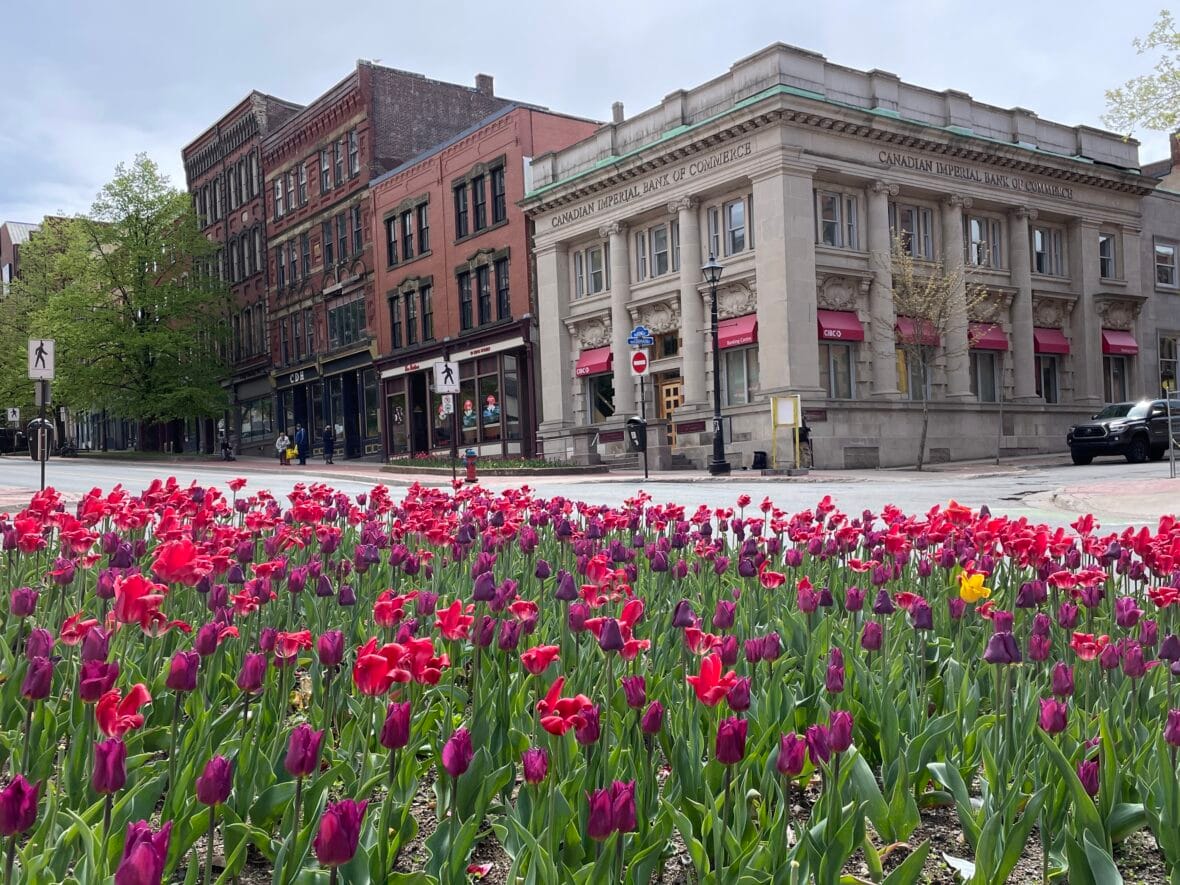
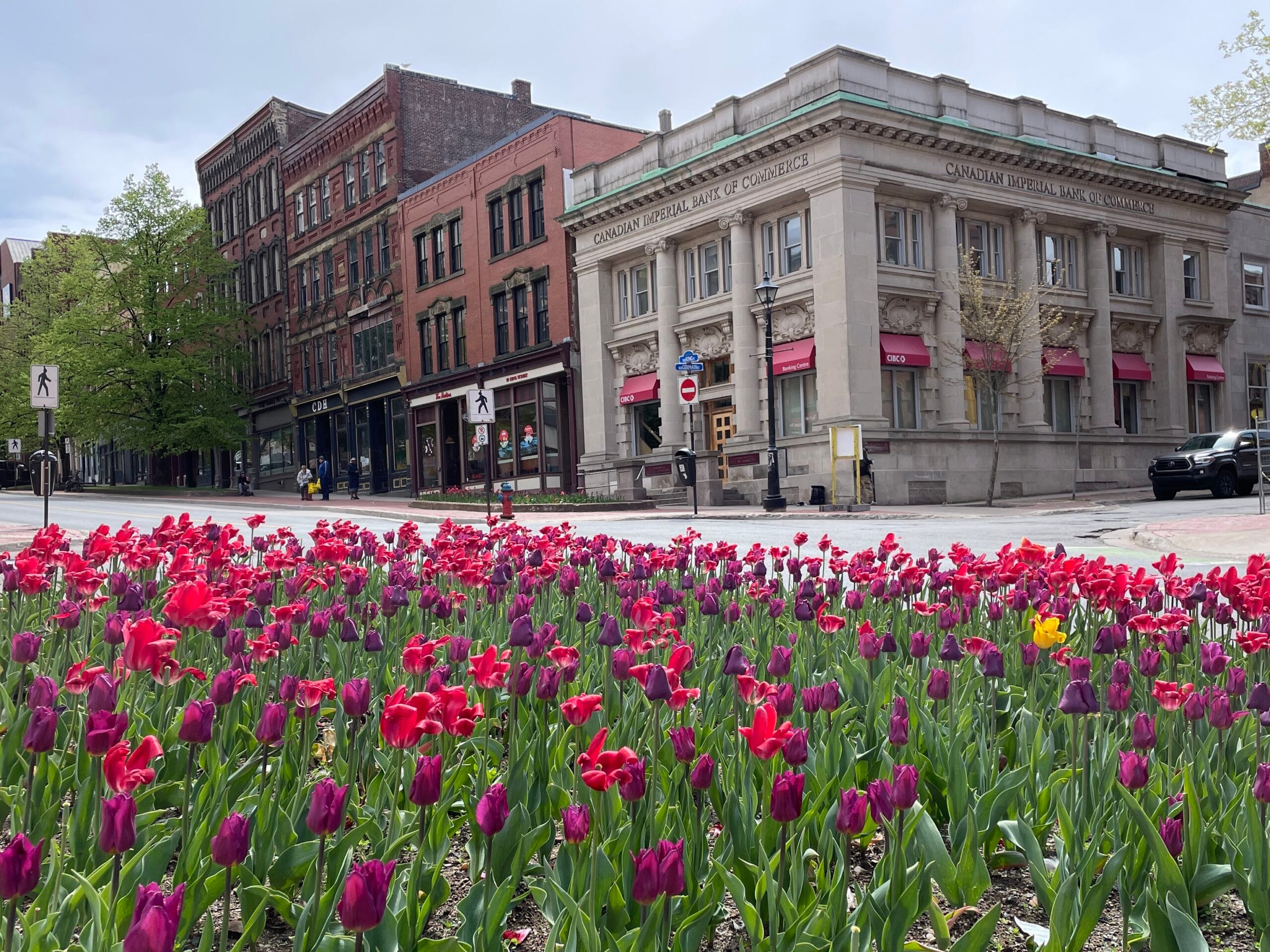
A leisure walk through uptown Saint John reveals a remarkable concentration of many landmarks, many tied to milestones in Canada’s development.
On Carlton Street and Peel Plaza stands Canada’s first free public library, which opened in 1883 and now houses the Saint John Arts Centre. A few blocks away at the corner of Prince William and Duke Streets is Saint John High School. Founded in 1805 as the Saint John Grammar School, it holds the distinction of being Canada’s oldest continuously operating public high school. Continuing along Prince William Street toward Princess Street, you’ll find the former headquarters of the Bank of New Brunswick, established in 1820 as the first Canadian bank to operate under a charter.
Canada’s oldest indoor market
To see a more complete picture of Saint John’s “firsts”, head to Germain Street between King and Union, where the Saint John City Market – itself the oldest continuing indoor market in Canada, dating back to 1876 – stands. On a wall at the north end of the market is a plaque listing 34 milestones, including:
- Canada’s first fire insurance company, founded in 1801.
- Canada’s first police force, established in 1826.
- Canada’s first public museum, founded in 1842 and operating continuously since.
- The world’s first postage stamp album, invented by a Saint Johner in 1853.
- The world’s first steam fog whistle—an early form of foghorn—was invented and installed in Saint John Harbour in 1859.
- Canada’s first YMCA, established in 1870.
- The first wire nails, manufactured in 1891.
- The first Miss Canada title, awarded to a contestant from Saint John in 1923.
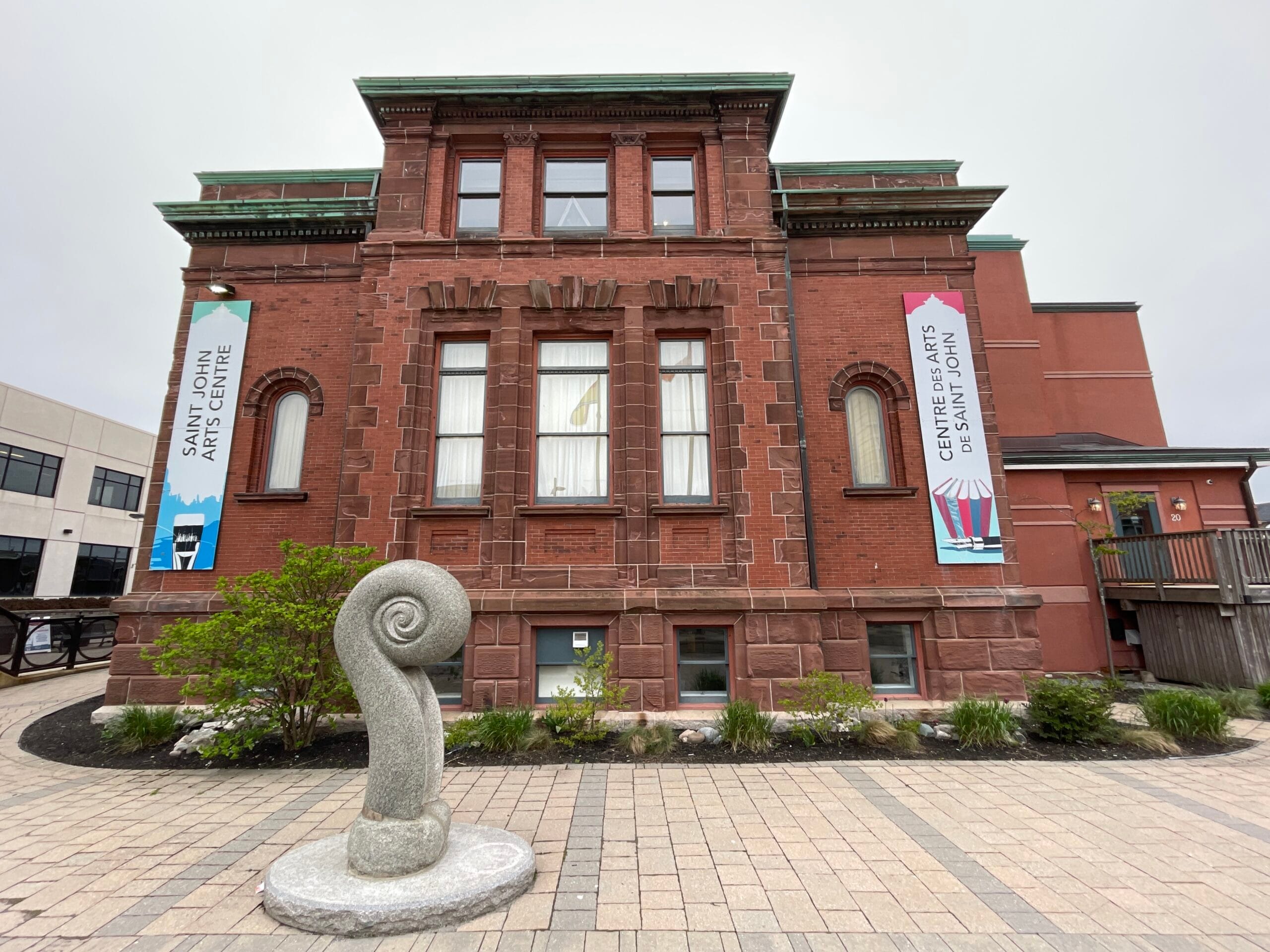
Canada’s first free public library is now home to the Saint John Arts Centre.(Photo by Ming Tappin for Vacay.ca)
A Billion Years in the Making
Saint John’s fascinating history isn’t limited to its historic landmarks and record-setting achievements: it extends far beneath the surface as well. The entire city lies within the Stonehammer UNESCO Global Geopark – an area covering 2,500 square kilometres that is, fittingly, Canada’s (and North America’s) first geopark. In the planet’s early formation, this part of New Brunswick was shaped by intense geological forces. So while Saint John may have been incorporated in 1785, its history actually began one billion years ago, as evidenced by rocks and fossils found throughout the area.
Fossils date back 1 billion years
Three geosites are located around Saint John. Rockwood Park – the largest urban park in Canada – holds several remarkable geological features, including a 554-million-year-old lava rock face, as well as remnants of the ancient supercontinent Pangea. Along a road within the park, visitors can literally travel between the continents, with 500-million-year-old shale from Africa on one side, and nearly one-billion-year-old limestone from South America on the other. These same rock formations appear on opposite banks of the Saint John River at the second geosite, the Reversing Falls Rapids. Finally, at Irving Nature Park, visitors can search for fossils embedded in the layers of sediment that formed the red clay cliffs along the shoreline.
Celebrate Canada Day, the Saint John Way
With its rich history, remarkable list of Canadian “firsts,” and ancient geological story, Saint John is a unique place to celebrate Canada Day. While the city will host Canada Day festivities at various locations, for a truly unique experience, head to the Visit Canada Trail in Rockwood Park. The trail offers a symbolic journey across the country, featuring 13 stone monuments representing each Canadian province and territory.
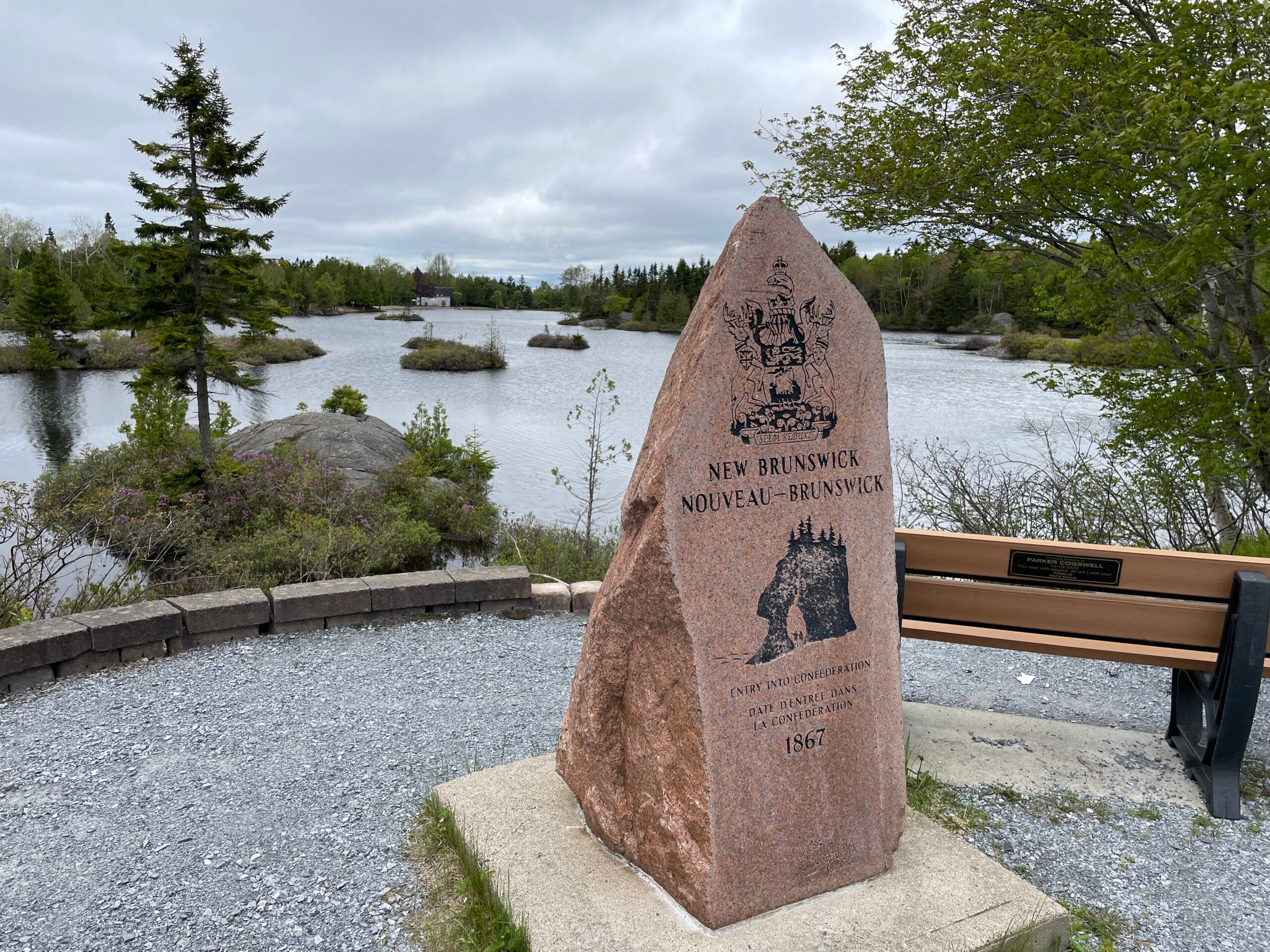
On Canada Day, visit every province and territory in minutes on the Visit Canada Trail in Rockwood Park. (Photo by Ming Tappin for Vacay.ca)
Celebrate Canada Day in every province and territory at one site
Every marker is inscribed with a provincial or territorial symbol and the year it joined Confederation. Most notably, every monument is carved on a rock brought from its corresponding province or territory.
You can quite literally celebrate Canada Day in every province and territory in a single afternoon!
Afterwards, celebrate with a Moosehead beer, brewed in Saint John since 1867. And like much of the city’s story, Moosehead also holds a distinction: it is Canada’s oldest independent, family-owned brewery. And coincidentally, 1867 was the year of Confederation itself.
Happy Canada Day!
Things to Do in Saint John
Area 506 Container Village
Named after New Brunswick’s area code, Area 506 is a waterfront shopping and dining hub built from repurposed shipping containers. It hosts concerts, festivals, movie nights, and trivia events from May to November. A rooftop viewing deck offers views of the Saint John harbour – an ideal spot to relax with a drink.
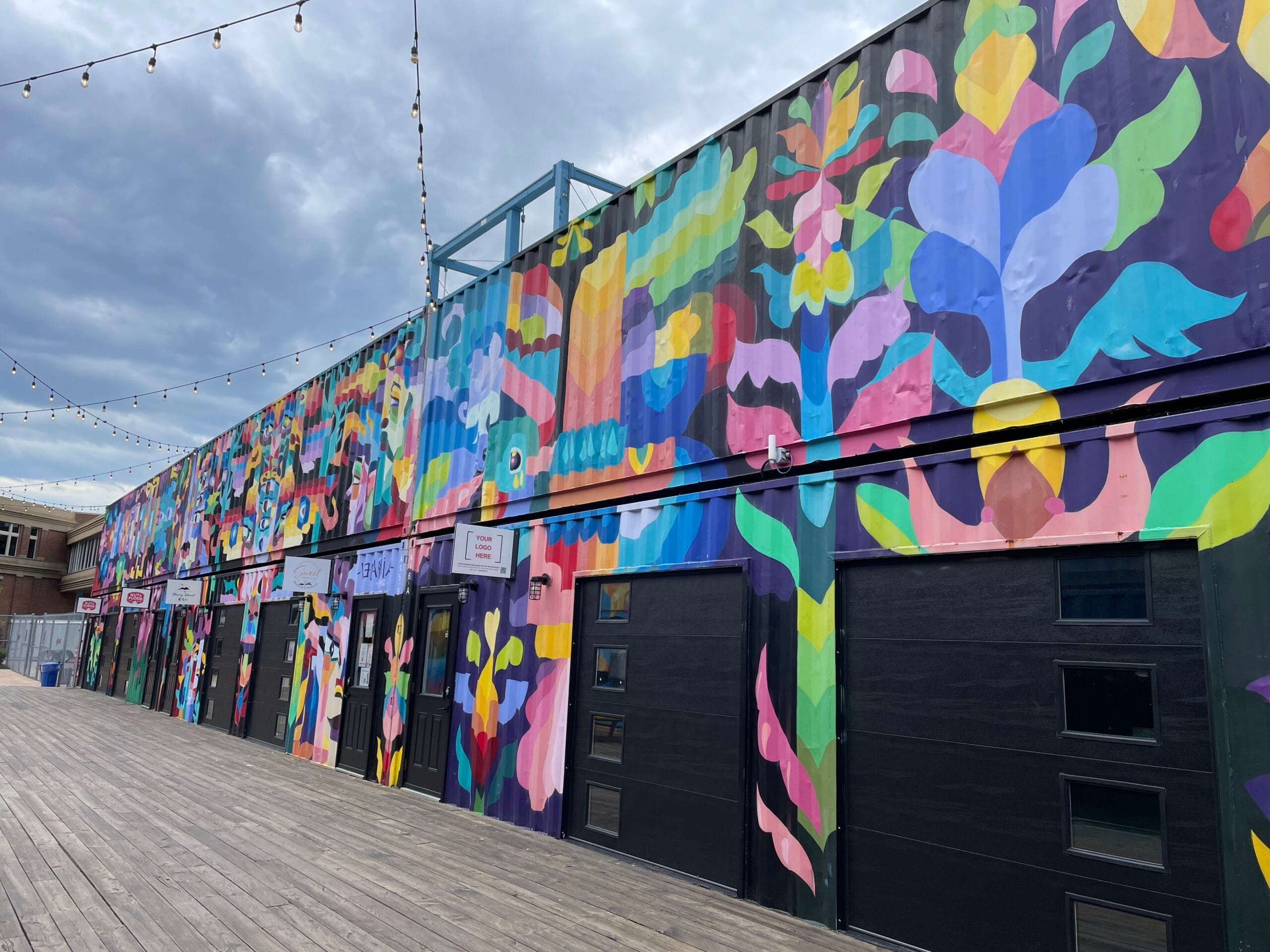
Area 506 Container Village offers shopping and dining, built from repurposed shipping containers. (Photo by Ming Tappin for Vacay.ca)
Reversing Falls Rapids
This attraction is a bit of a misnomer, as the ancient falls have long since disappeared following rising sea levels and riverbed erosion. But what you can witness during high tide is the Saint John River flowing backwards, as 160 billion tons of water surge inland from the Bay of Fundy, creating whirlpools and fast-moving rapids. Check tide tables in advance for the best viewing times.
Outdoor Activities
The Harbour Passage follows Saint John’s waterfront and features a series of public art installations, including a replica of the Marco Polo, a vessel built in Saint John in 1851. It was the first to circumnavigate the globe in less than six months, earning its title “the fastest ship in the world”.
Walking and hiking trails can also be found at Rockwood Park, Irving Nature Park, and, a little further afield, the Musquash Estuary Coastal Trails. Stargazing is possible at Irving Nature Park, recognized as Canada’s first Urban Star Park and a Certified Dark Sky Destination; guided astronomy experiences are available through Cliff Valley Astronomy.
Uptown Saint John
Uptown Saint John is home to over 85 independently owned bars and restaurants within a compact 10-block area. Here are just a few recommendations:
Indian cuisine: Thandi
Cocktails: Hopscotch
Celebrity chef dining: Saint John Ale House
Detroit-style pizza and craft beer: Beer Bread Pizza
Coffee: Java Moose Uptown
Discover many of Saint John’s “firsts” on one of three self-guided historical walking tours.
Explore Saint John’s art scene through the Art in Public Places walking tour.
Guided walks and other outdoor activities can also be arranged through Go Fundy Events.
Find other Vacay stories about Saint John on Vacay.ca
For more information, visit the Discover Saint John website.