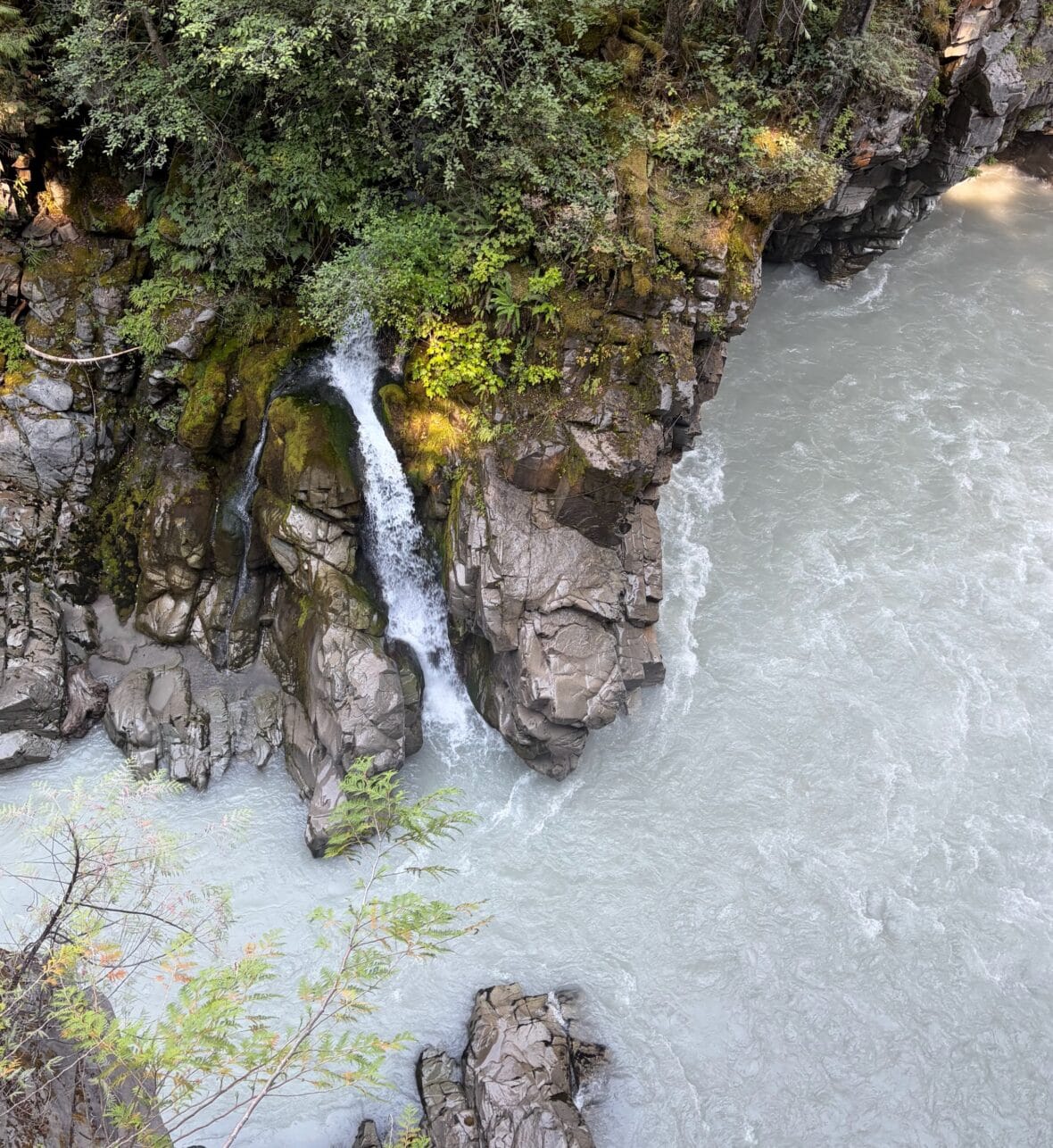

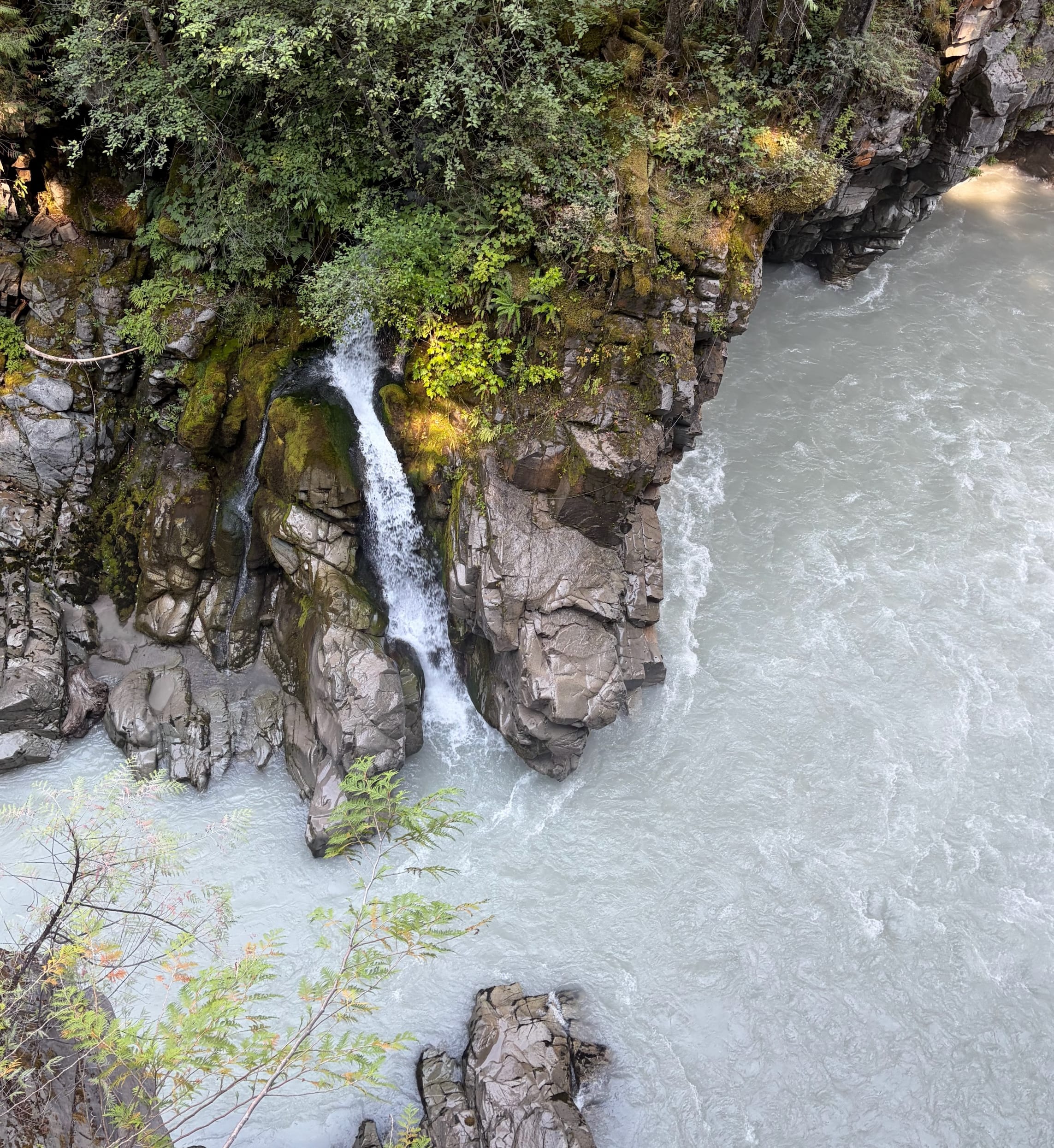
The falls at Squamish Canyon showcase the beauty of the Coastal Mountain region, including turquoise waters and pristine landscape. (Adrian Brijbassi photo for Vacay.ca)
The success of Squamish has been one of the of the great Canadian tourism stories of the 21st century. Once a drive-by with a stunning roadside waterfall and curious granite rock face that has attracted climbers for who knows how long, Squamish was chiefly known as the halfway point between Vancouver and Whistler. It has become much more.
When the Sea-to-Sky Highway expanded two decades ago to accommodate traffic for the 2010 Winter Olympics, Squamish ended up winning gold in more ways than one. The speed with which a Vancouverite could access the city — self-proclaimed as the Outdoor Recreation Capital of Canada — was cut roughly in half, which helped boost its real estate industry and attracted several small-business owners. Then the tourism boom began.
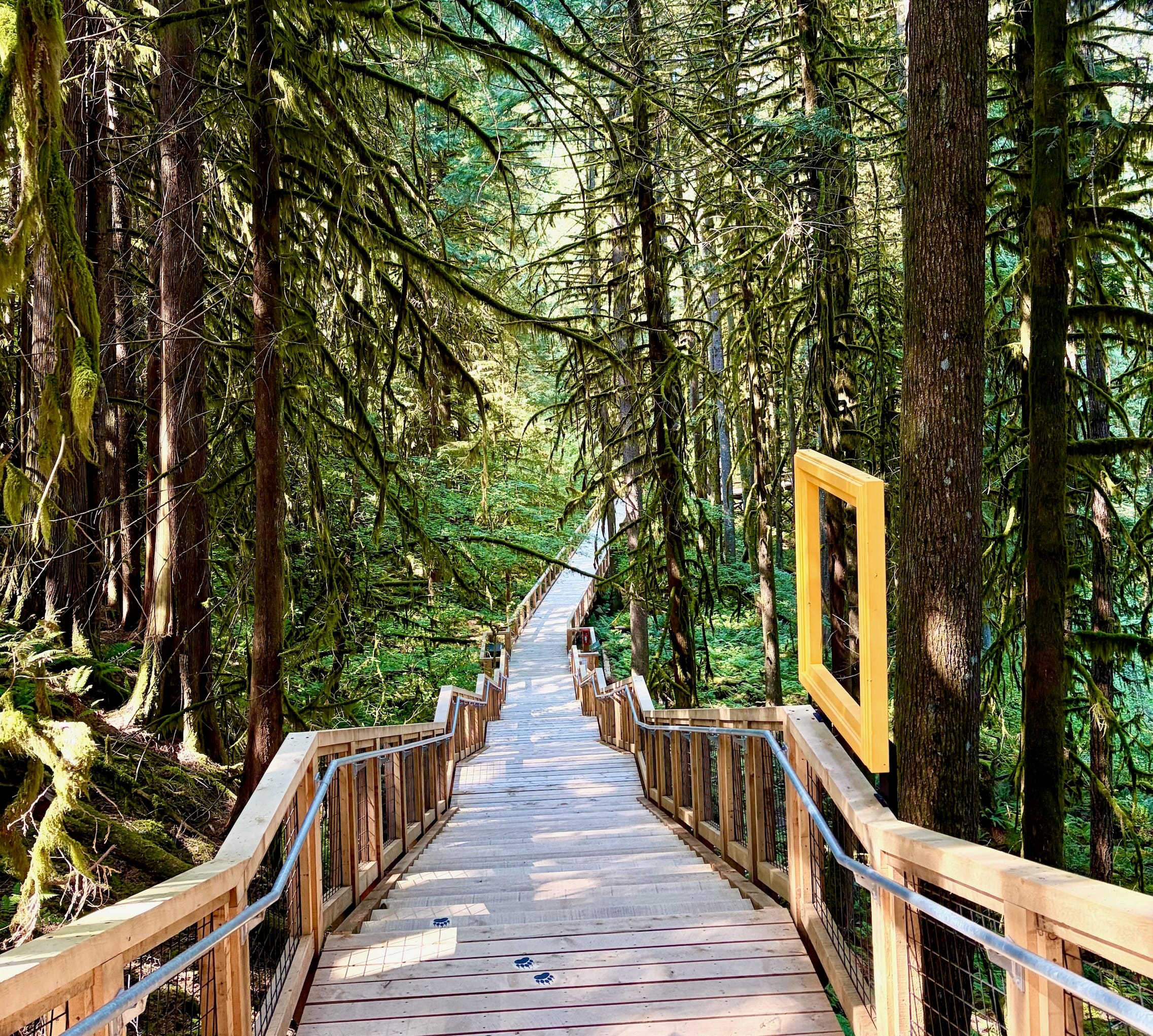
The developers of Squamish Canyon took down only two trees in constructing the boardwalk attraction. (Adrian Brijbassi photo for Vacay.ca)
Most notably, the Sea-to-Sky Gondola debuted in 2014 to global acclaim and remains one of the top attractions in the British Columbia Lower Mainland. It showed that travellers would make Squamish a must-see itinerary stop on their coastal tour. Rich with nature, Indigenous culture, and sweeping views of Howe Sound, the gondola was an immediate hit. It took riders on a climb of 885 metres (2,904 feet) to a summit that reveals a view so stunning your heart might continue to rise long after your feet have stepped off the tram. Following its opening, these additions were made:
- a thrilling Via Ferrata with handholds pounded into the rock that climbers self-harness themselves onto as they clamber along to the top;
- a short rope bridge for those less adventurous;
- interpretive tours, some with Indigenous guides from the Squamish First Nation;
- and regular music programming.
With those features, the gondola secured its status as an anchor attraction for Squamish.
In July 2025, another notable tourism landmark debuted with some of the same attributes. Squamish Canyon is set amid the towering forest of Douglas fir, oak, and arbutus trees. A boardwalk of approximately 1.5 kilometres (about 0.95 miles) was built through it — and remarkably only two trees were cut down in the process. The amble leads visitors to a waterfall that is far less known than the highway-adjacent Shannon Falls. Rather than gazing up at the cascading water, Squamish Canyon’s patrons look down at Mamquam Falls, which is 19 metres (62 feet) tall and descends into a turquoise river with rapids and a rocky shoreline the colours of blue and slate.
MORE B.C.: Escape to Whistler
The forest walk feels magical beyond the highlight view. A family-friendly attraction, Squamish Canyon includes a large gathering space at its heart. Made with wood planks, it offers a take-out restaurant that serves hot dogs, beer, and other staples of a Canadian backcountry escape. The culinary program is expected to ramp up its quality and menu listings in 2027, according to Squamish Canyon’s representatives. The added amenity will improve the experience that has already won notoriety for its environmental care, educational content, and meditative feel. The eco-friendly aspect of the canyon is quite organic, because it was a forest maintenance worker who first conceived of the idea for a pathway through the woods. His brainchild led to the development by Canadian-owned Ridge North America.
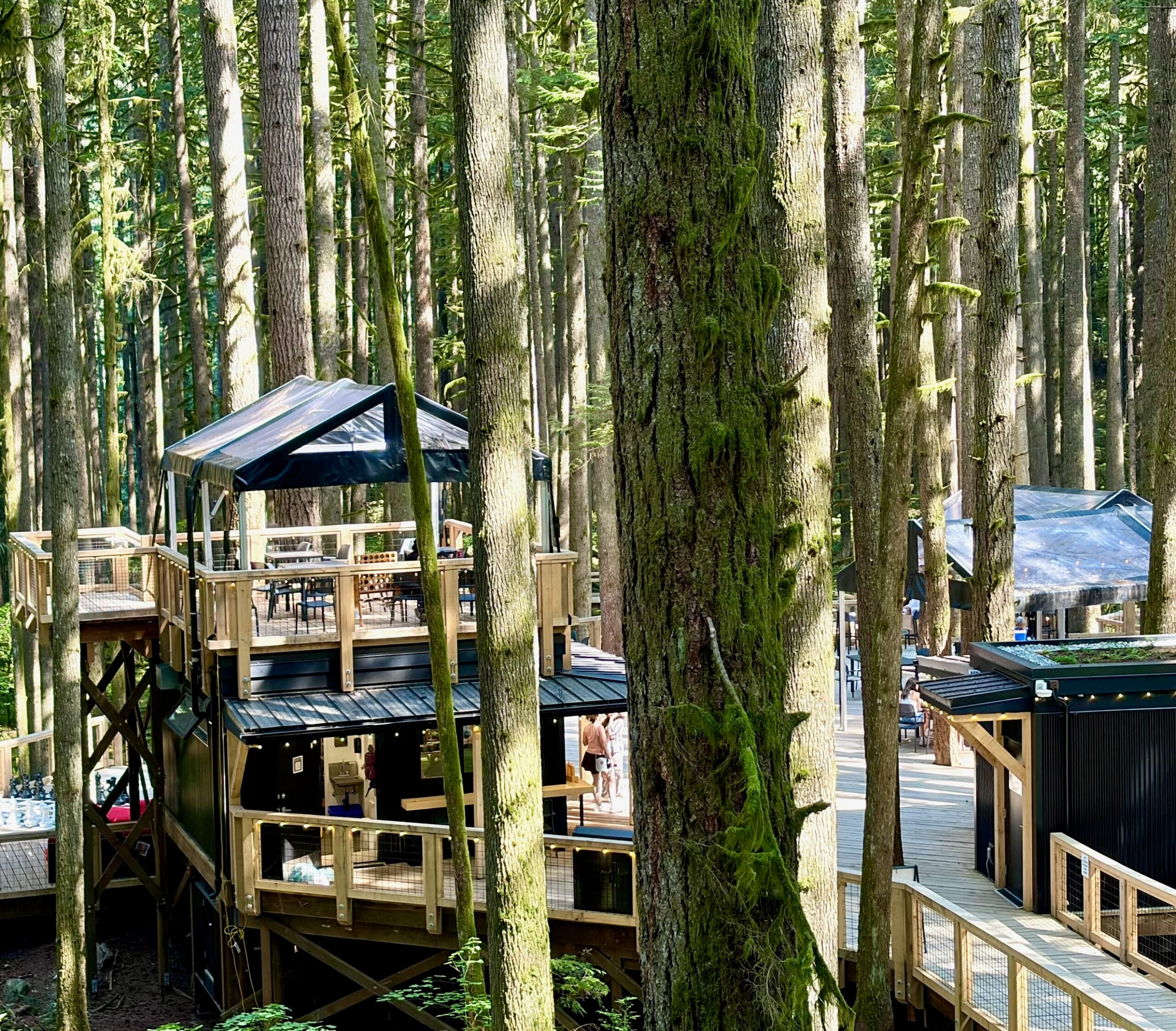
The Squamish Canyon restaurant and event space is set beautifully amid the forest. (Adrian Brijbassi photo for Vacay.ca)
The canyon is similar to the Malahat Skywalk north of Victoria in that the boardwalk is elevated off the ground, allowing those walking through to observe from a different perspective the trees and the birds, insects, and small rodents who share the space.
During my walk on a hot August day, I was amazed by the freshness that made the climate feel like a pleasant natural air conditioner. The denseness of the trees and the proximity to the river brought a cooling effect to the woods. Light daggered through the leaves, adding to a sensation that felt cinematic.
It’s because of such attributes and the ease of its experience that Squamish Canyon has created buzz after only one year in operation. It has hosted large tour groups and a number of private events and even weddings, working with catering firms to deliver memorable menus. Steeped in nature, it punctuates Squamish’s reputation. It also embraces the rain of the west coast, staying open year round and handing out umbrellas for guests to use during their visit when the skies open.
The canyon gives travellers another notable reason to explore. You can add it to the already popular ride up the Sea-to-Sky Gondola, hike to the top of the Squamish Chief, and sighting of massive numbers of birds of prey during the annual Brackendale Eagle Count in January.
With added accommodations on the horizon and more tours along the Sea-to-Sky Highway planned, Squamish is having a moment that appears to be never-ending.
More About Visiting Squamish Canyon
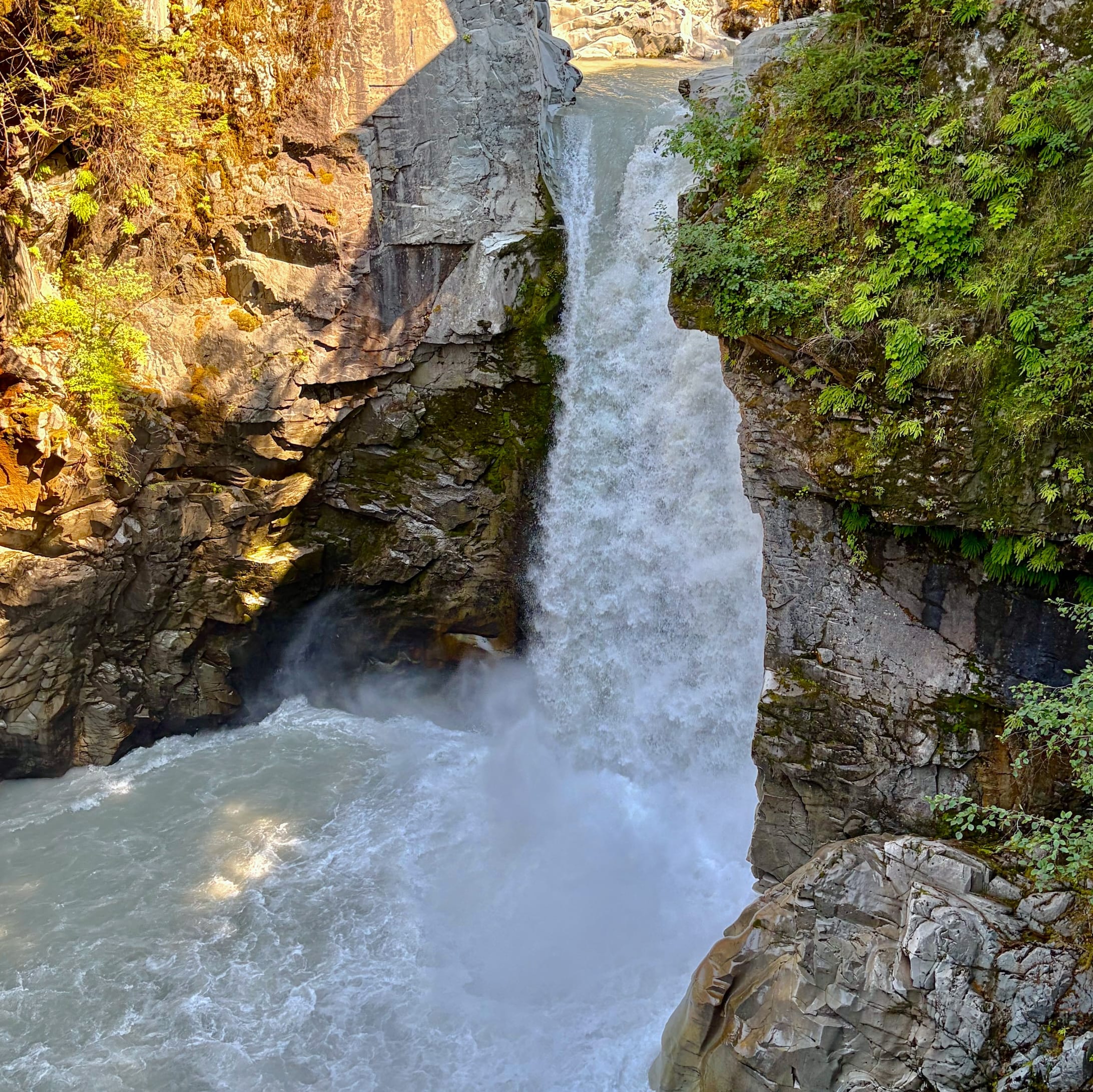
The view of Mamquam Falls is the primary attraction of Squamish Canyon. (Adrian Brijbassi photo for Vacay.ca)
Location: 39180 Powerhouse Springs Road, Squamish, British Columbia (see map below)
Admission: Visitors can save when they book online. Regular-priced adult tickets are $39 each; tickets for children aged 6-15 are $26 each, and kids 5 years old and younger can enter for free. Family passes (two adults, two kids) cost $105.
Notable: For more able hikers, a free trail is accessible right next to the Squamish Canyon entrance. The Mamquam Falls Public Trail is a round-trip route of about 2 kilometres (1.9 miles) and takes about 40 minutes to complete. For those driving to either Squamish Canyon or the Mamquam Falls trail, be mindful that the route from the highway to the parking area is unpaved. Your car will get dusty and be vulnerable to rocks or gravel being pitched up from the tires of passing cars.