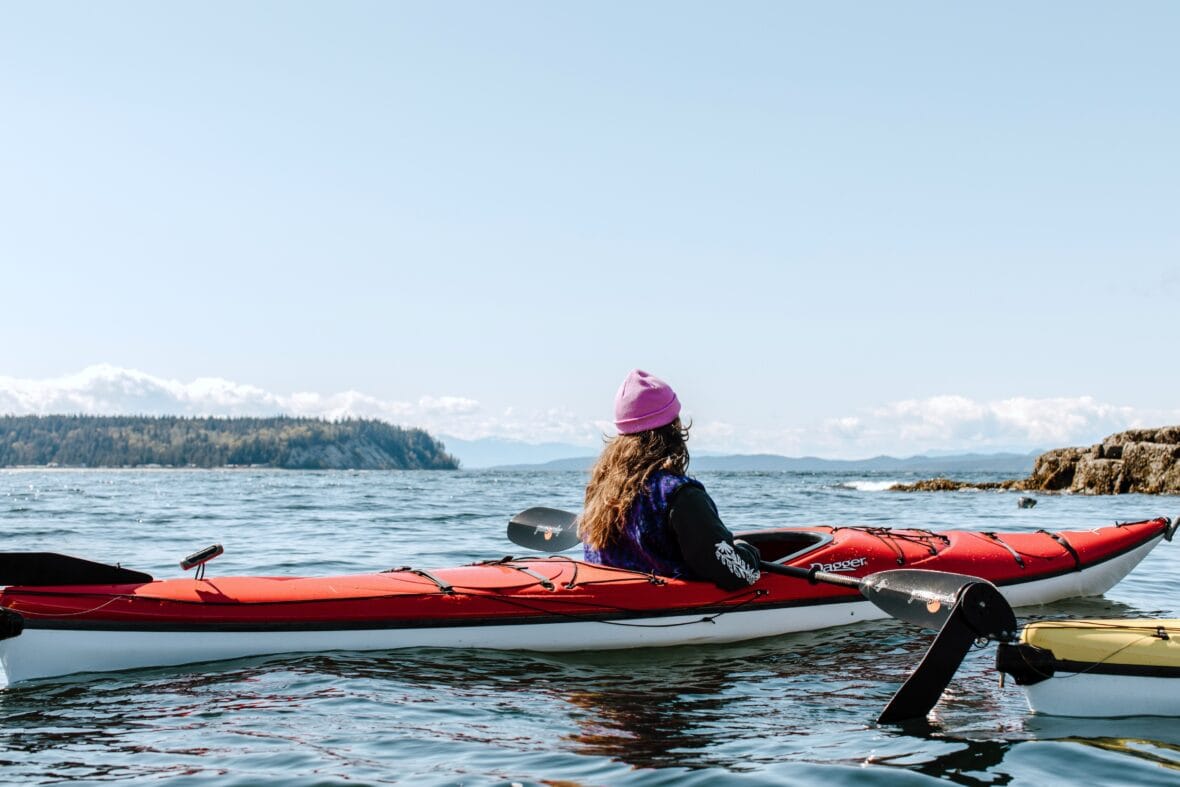

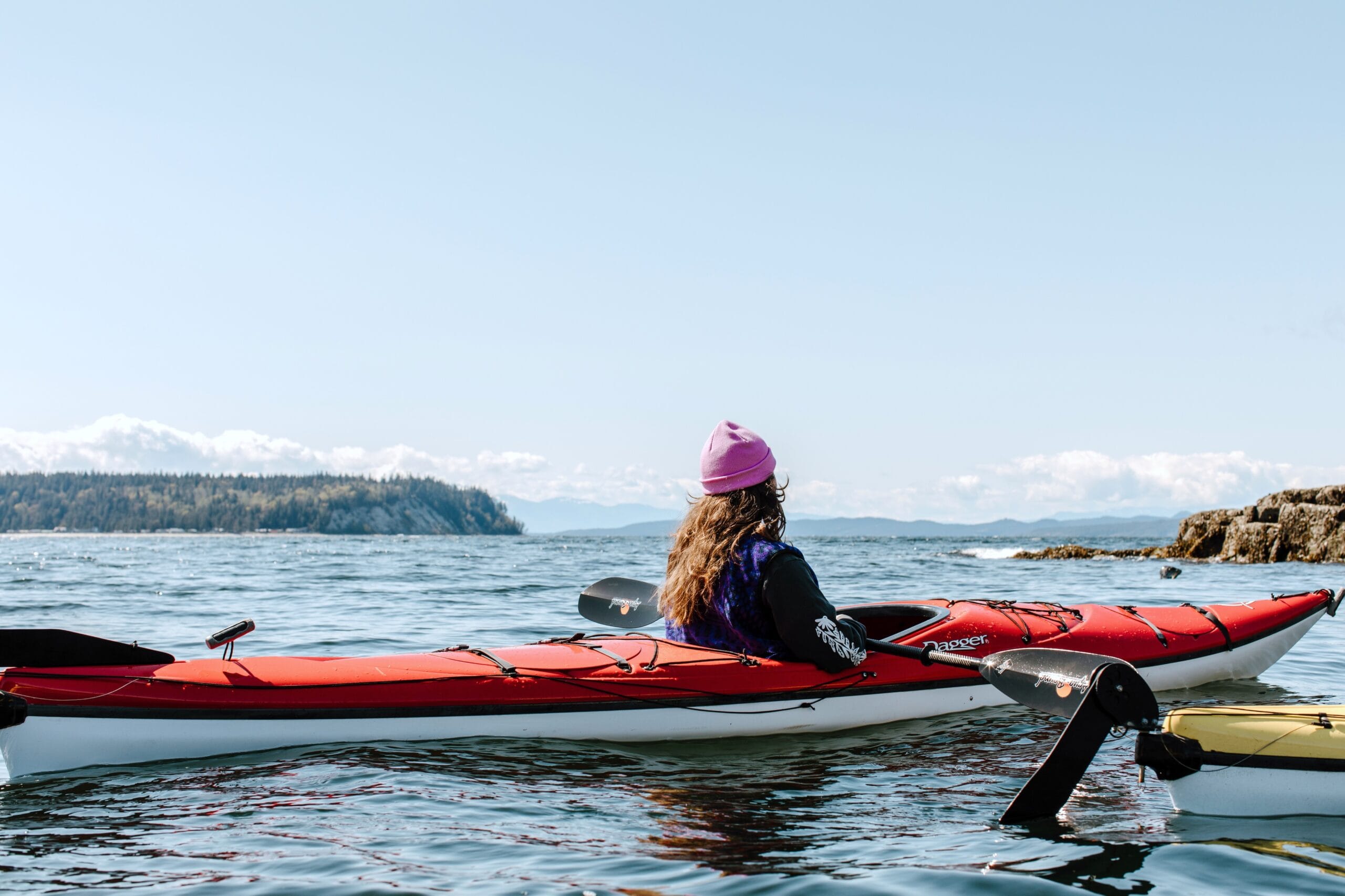
Nature is the highlight attraction on the Sunshine Coast. Here, a kayaker paddles at Secret Cove in Halfmoon Bay. (Destination BC photo)
I’m hiking Skookumchuck Narrows, with my partner, where ferns fan out under towering cedars cloaked in moss. Snowmelt rushes over smooth, multi-hued rocks, leaving a slippery surface. The look is layered, lush, like something out of a fairytale. At the end of the hike, I find orange and purple sea stars, clinging to rock, and a perfect view of the rapids. It’s both a highlight moment and a not uncommon experience in the Sunshine Coast.
Located in southwest British Columbia, the Sunshine Coast offers an invigorating road trip, with tiny towns joined to the mainland by ferry, Indigenous cultural experiences, and too many hiking trails to count. You can easily cover the 180 kilometres (112 miles) of Highway 101 from Langdale to Lund in one day, or roll through slowly, over six days, as we did, taking time in each community, soaking up the laid-back vibe, and watching the tide come in.
Day 1: Roberts Creek to Sechelt
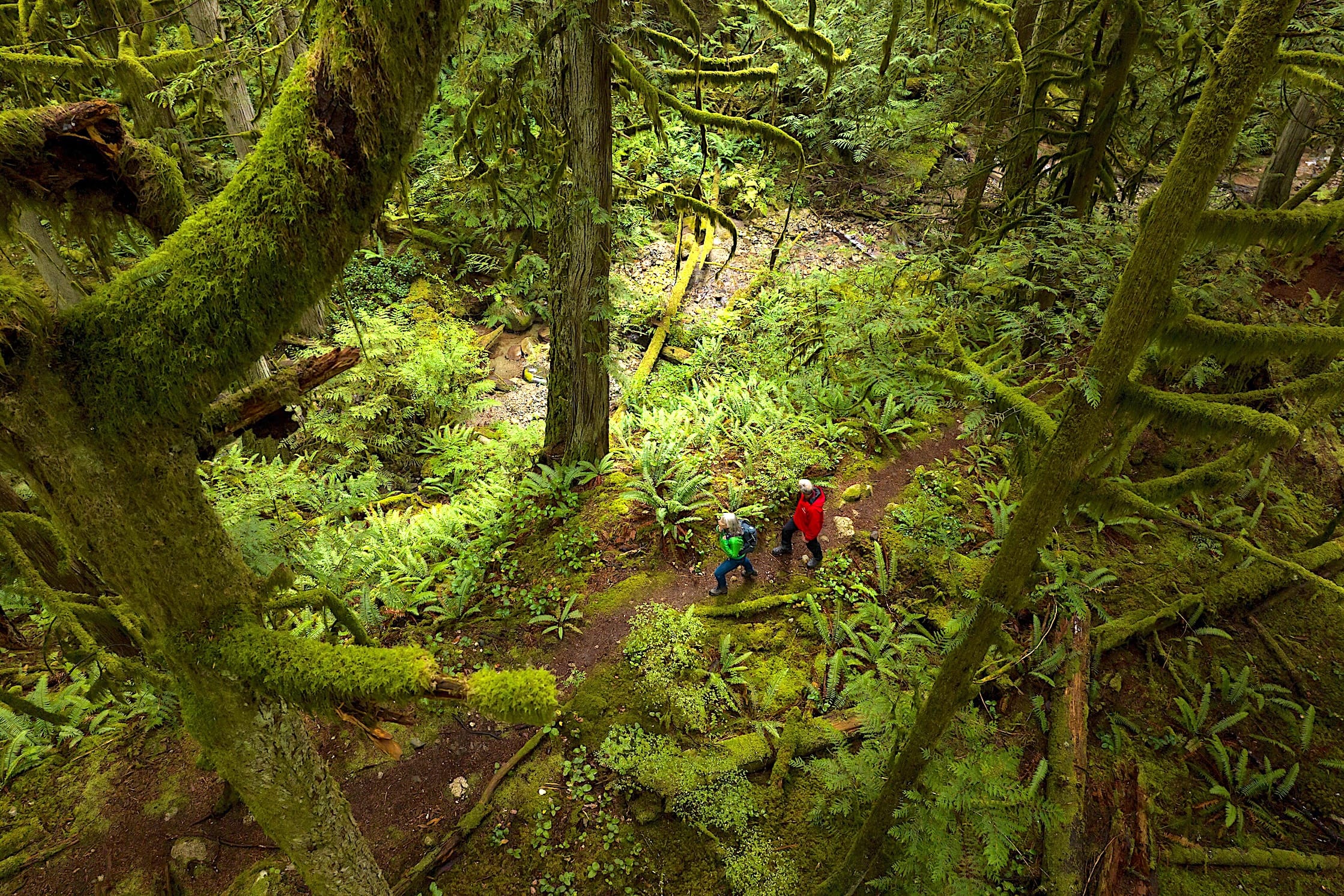
Hikers traverse the rainforest in Roberts Creek on the Sunshine Coast, which features foliage-rich landscapes and scenic views throughout. (Destination BC photo)
We cross Howe Sound on the 40-minute ferry from Horseshoe Bay to Langdale. Our first stop is Roberts Creek, about 30 minutes from the B.C. Ferries’ Langdale terminal. The forested, arts‑driven community is centred around Roberts Creek Road, the Gumboot Café, and a mandala, a large, circular, community-painted artwork.
The 7-kilometre (4.4-mile) stretch north of Roberts Creek gives glimpses of ocean and rocky beaches. About 2 kilometres (1.3 miles) from Sechelt, Porpoise Bay Provincial Park sits on the sheltered, warm‑water side of Sechelt Inlet. Here we meet Anneke Vader for a tour called “Salish Sea & Me,” one of the many offerings from Talaysay Tours. The Salish Sea spans three bodies of water: the Strait of Georgia, Puget Sound, and the Strait of Juan de Fuca.
Vader stands in front of a western hemlock and invites us to get to know the tree as we would a friend. We rub the soft needles between our fingers, and breathe in the scent of grapefruit. “I put them on my salad,” she says.
The guide then invites us to pick up objects on the beach. I find a rock cemented with acorn barnacles that filter water, feed sea stars, stabilize rocks, and create tiny habitats. Vader says that the barnacles have the largest penis‑to‑body‑size ratio of any animal on Earth, because they are stuck in one place and have to reach a mate.
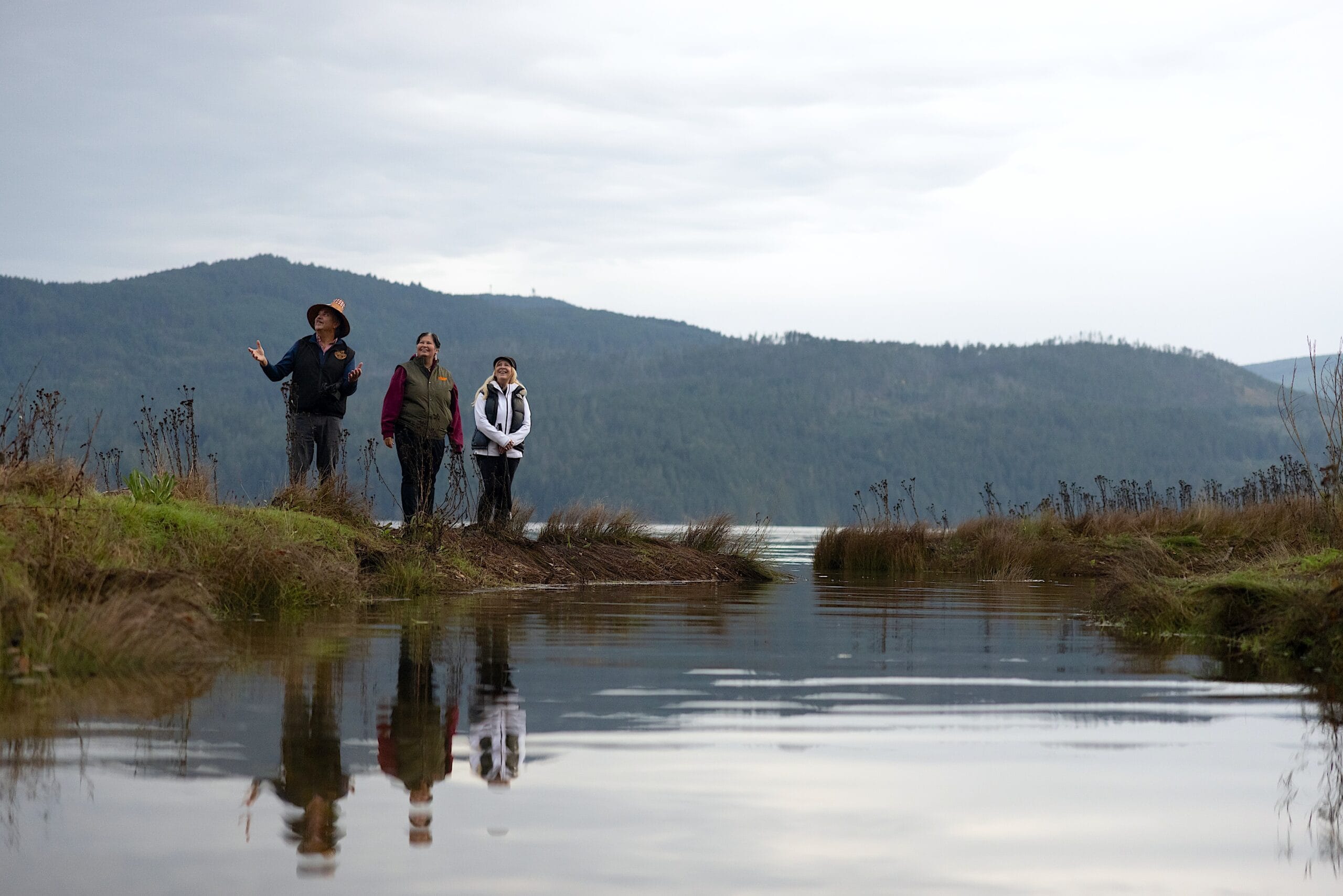
Talaysay Tours features Indigenous-led experiences in various locations of British Columbia, including at Porpoise Bay Provincial Park on the Sunshine Coast. (Destination BC photo)
At the end of the tour, I put my hands around a teacup for warmth. The tea smells like licorice; it’s sweet without sugar. After the tour, we settle in at the Sechelt Inn. Our room faces Trail Bay.
The Lighthouse Pub affords clear views of Porpoise Bay, where we watch seaplanes land. I order the Sunshine Coast seafood chowder with big chunks of carrots, scallops, potatoes, and salmon. It is thick and filling.
Day 2: Sechelt
The Tems Swiya Museum houses exquisite cedar basketry, ancient stone tools, mortuary materials dating 3,500 years, and ancestral belongings that reflect more than 4,000 years of Shíshálh history. Archaeological work uncovered spear points up to 11,000 years old, evidence of some of the region’s earliest ancestors.
The Shíshálh Nation owns and operates the Tsain Ko Village Shopping Centre at the southern entrance to the town, with restaurants, retailers, and cultural artworks. We stand before a group of five totem poles, erected in 2007. Each one has several figures symbolizing strength, health, family, and togetherness, among other themes. The centre also showcases the works of other artists.
Tip: Take the Sechelt Totem Pole Tour.
Day 3: Egmont
About an hour’s drive north of Sechelt in Egmont, Skookumchuk Narrows, or “Skook” as it is affectionately named, is one of the great whitewater wonders of the world. Here the Sechelt Rapids change direction twice a day, forcing as much as 200 billion gallons of water through the narrows connecting Sechelt and Jervis inlets, drawing divers and kayakers.
At the North Point lookout, we walk the rocky shoreline for a wide-angle view of the narrows and whirlpools forming at peak tide. Roland Point has large, standing waves and a narrow channel with a visible water height difference best seen at low tide. The reward for the moderate hike was a colony of sea stars.
Tip: Check the best viewing times.
Our suite at the West Coast Wilderness Lodge offers panoramic views of Sechelt Inlet. The cream-and-blue decor creates a nautical feel extending to the balcony.
Tip: If you are visiting in shoulder season, make sure there are restaurants open or buy provisions for meals.
Day 4: Lund
The drive from Egmont north to Lund takes about 1 hour and 45 minutes, which includes a ferry crossing in the middle. In 2016, the Tla’amin Nation acquired the Lund Hotel, naming it the Lund Resort at Klah ah men. The resort weaves Tla’amin Nation art into every part of the property.
The Boardwalk Restaurant is conveniently located a five-minute walk from the resort. We watch the sun set from the ample deck facing Lund Harbour. I toast the day with a blackberry mojito and fish and chips. The lingcod is mild with a firm texture. My meal ends on a high note with chocolate cake garnished with blackberries.
Day 5: Lund to Halfmoon Bay
Before boarding our boat for Desolation Sound with Terracentric Coastal Adventures, we taste some delicious blackberry cinnamon buns at Nancy’s Bakery. We meet our captain and zip up floatable red jackets to keep out the cold and maintain buoyancy, should we get ejected from the Zodiac. The captain confirms that no one has fallen from his boat yet. “I have to come back with the same amount of people,” he quips.
From the Zodiac, we see orange-beaked oystercatchers, sea lions sunning themselves, and many sea stars in shades of red and purple. The boat floats next to a 400-year-old pictograph of a red orca. The captain warns us not to touch any sea cucumbers: “If you pick it up, it’ll pee on you, and you’ll know which end is up.”
From Lund we head back south to Rockwater Resort in Halfmoon Bay, where we see seals at the boat launch and eagles flying over Malaspina Strait between the Sunshine Coast and Texada Island.
Day 6: Gibsons
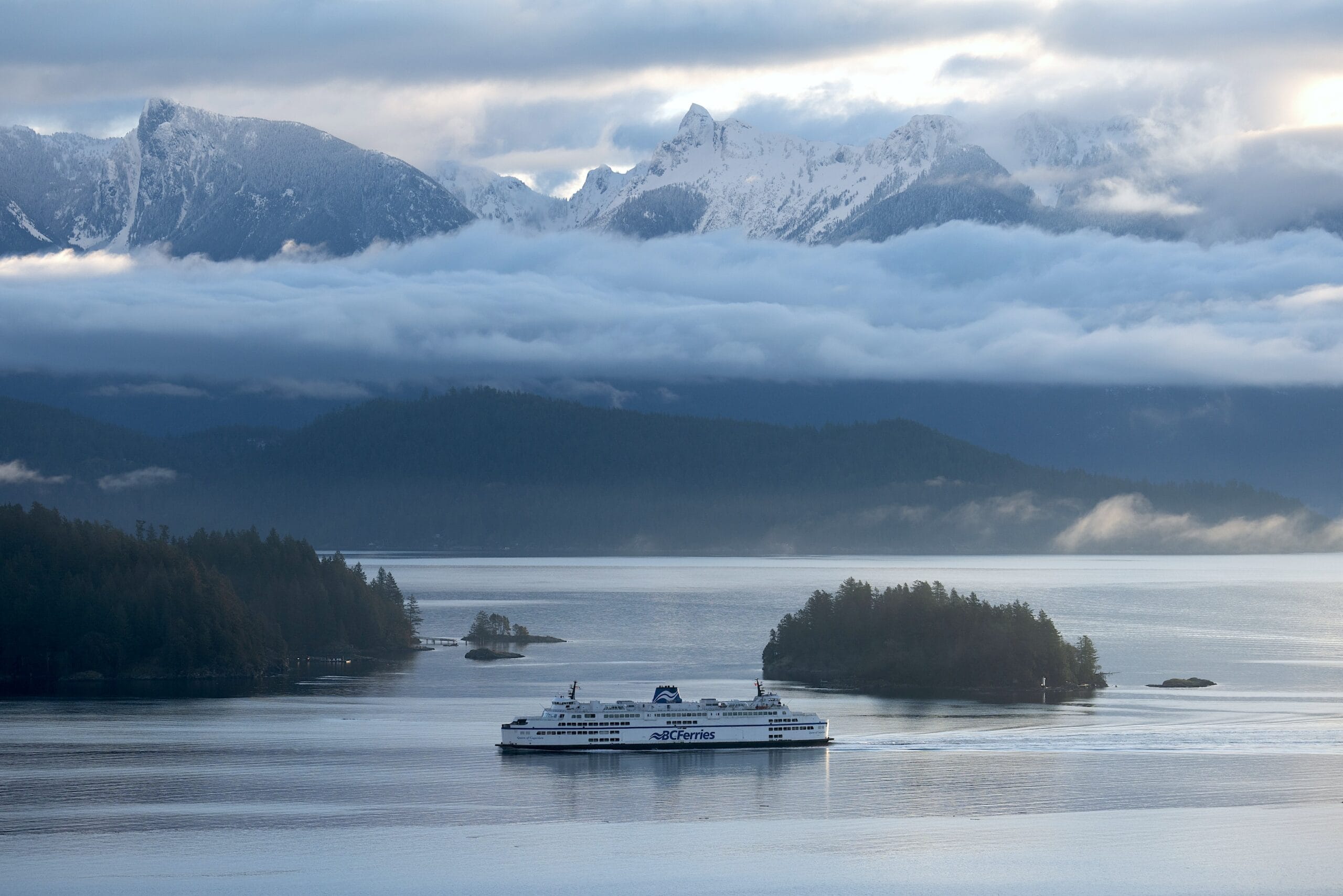
Travellers most frequently reach the Sunshine Coast via a BC Ferries sailing from Horseshoe Bay north of Vancouver to Langdale. (Destination BC photo)
From Lund we head south to Gibsons. Just 25 kilometres (15.5 miles) from Halfmoon Bay along Highway 101, Gibsons is best known as the main filming location for “The Beachcombers”, one of Canada’s longest-running TV series. Here, lush hills drop into a picture-perfect harbour where sailboats bob. Pick up a coffee from Mike’s Place on Gower Road and wander along the seawalk, or take a hike.
The views from the 5-kilometre (3.1-mile) Soames Hill hike of Gibsons Harbour, Howe Sound, and the coastal mountains justify the climb up 434 steps. The trail leads down to the beach and back up again. After the hike, head to Gramma’s Pub for a pint.
After six days on the Sunshine Coast, what lingers is the character of each community, from the artsy Roberts Creek and Gibsons, to Sechelt’s deep Shíshálh history, Egmont’s rushing rapids, and Lund’s Tla’amin Nation culture and access to Desolation Sound. Pausing along Highway 101 gives time to linger along the water and witness traditions that set the Sunshine Coast apart.